
1.19.2026
Walking in the footsteps of Jesus and exploring the lands where biblical events unfolded remains one of the most meaningful travel experiences for Christian believers. Each year, millions of Christian travelers visit Israel not simply as tourists, but as pilgrims seeking spiritual renewal, deeper biblical understanding. For hospitality leaders, tour operators, and travel providers serving faith-based segments, Christian pilgrimage travel represents a resilient, high-intent market defined by longer stays, structured itineraries, and strong demand for purpose-driven experiences.
Israel offers Christian guests something no other destination can: the opportunity to stand in the very places where the Gospel accounts took place. For lodging operators, destination marketers, and group travel planners, understanding the significance of key biblical sites is essential to delivering experiences that resonate deeply with Christian travelers.
The Church of the Holy Sepulchre: The Spiritual Centerpiece of Christian Pilgrimage
For Christian pilgrims, the Church of the Holy Sepulchre in Jerusalem’s Old City represents the most sacred site in Christianity. For Christians, the Church of the Holy Sepulchre is revered as the site of Jesus’s crucifixion, burial, and resurrection, making it the spiritual centerpiece of nearly every pilgrimage to the Holy Land.
Pilgrims enter the church to encounter the Stone of Anointing, believed to mark where Jesus’s body was prepared for burial, and ascend to Golgotha, the traditional site of the crucifixion. The tomb itself, enclosed within the Edicule, draws visitors from across denominations, often creating extended dwell times that shape the pacing of group tours and overnight accommodation planning in Jerusalem. Despite the crowds, the experience remains deeply moving and serves as the spiritual centerpiece of many Israel Christian tours.
The Sea of Galilee and Capernaum: Experiencing the Ministry of Jesus
The Sea of Galilee holds exceptional importance for Christian travelers because it was the setting for much of Jesus’s public ministry. Many of His miracles and teachings occurred along its shores, making the region a cornerstone of faith-based itineraries.
Capernaum, often referred to as “Jesus’s own town,” allows pilgrims to explore the remains of an ancient synagogue where Jesus is believed to have taught, as well as the site associated with the Apostle Peter’s home. Nearby, the Mount of Beatitudes provides panoramic views of the lake and marks the traditional location of the Sermon on the Mount.
Lodging properties in the Galilee region benefit from multi-night stays as Christian tour groups explore surrounding sites. Many hotels have adapted offerings to include group dining, meeting spaces for worship or reflection, and operational flexibility to accommodate structured pilgrimage schedules.
The Garden of Gethsemane: A Place of Reflection and Prayer
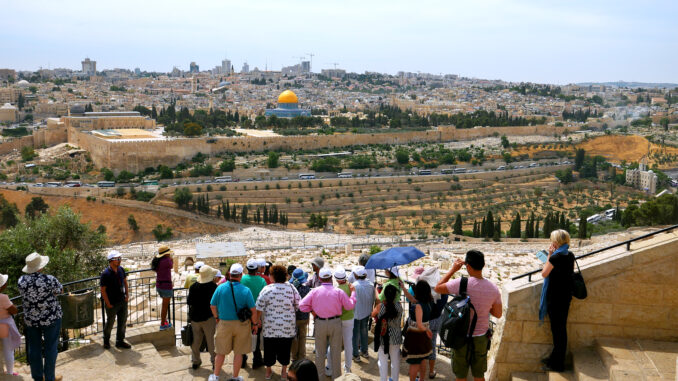
Located at the foot of the Mount of Olives, the Garden of Gethsemane is one of the most emotionally powerful destinations for Christian visitors. It is here that Jesus prayed before His arrest, making it a place of profound spiritual reflection.
Ancient olive trees, some believed to be centuries old, create a contemplative environment that resonates deeply with Christian pilgrims. The adjacent Church of All Nations shelters the traditional rock where Jesus prayed, serving as an important stop for guided Christian tours.
Because visits to Gethsemane are often integrated into broader Jerusalem itineraries, accommodation providers in the city play a central role in enabling efficient access to multiple biblical sites within limited timeframes.
Bethlehem and the Church of the Nativity: The Birthplace of Christ
Bethlehem holds immense significance as the birthplace of Jesus. The Church of the Nativity, one of the oldest continuously operating churches in the world, marks this foundational moment in Christian belief.
Pilgrims descend into the Grotto of the Nativity, where a silver star marks the traditional site of Jesus’s birth. The nearby Shepherds’ Field commemorates the biblical account of angels announcing Christ’s birth to shepherds, reinforcing Bethlehem’s central role in Christian pilgrimage narratives.
Christian travel groups frequently combine Bethlehem with Jerusalem-based accommodations, creating consistent demand for lodging infrastructure capable of supporting organized faith-based tourism.
The Jordan River: Baptism and Spiritual Renewal
The Jordan River holds extraordinary meaning for Christian travelers as the site where John the Baptist baptized Jesus. For many pilgrims, visiting the river represents an opportunity for personal spiritual renewal.
Locations such as Yardenit and Qasr al-Yahud provide facilities for baptism ceremonies and vow renewals, making them key components of Christian pilgrimage itineraries. These experiences often represent the emotional culmination of a faith-based journey, reinforcing the importance of well-coordinated travel logistics and accommodations throughout the pilgrimage.
Strategic Importance of Christian Pilgrimage Travel for Hospitality Providers
Christian pilgrimage travel represents one of the most consistent and globally distributed segments in religious tourism. Unlike leisure travel driven primarily by seasonal trends, Christian pilgrimage demand remains steady throughout the year, supported by churches, tour operators, and faith-based organizations.
Christian travelers often book structured group itineraries, stay longer than average leisure guests, and prioritize location, safety, and spiritual alignment when selecting accommodations. Lodging operators that understand these priorities can differentiate their properties by offering group-friendly infrastructure, proximity to biblical sites, and services tailored to faith-based travelers.
Supporting Faith-Based Travel Through Hospitality Excellence
For Christian pilgrims, visiting Israel is far more than a vacation. It is a transformative spiritual experience rooted in faith, scripture, and personal devotion. For hospitality providers, supporting this journey represents both a meaningful service and a strategic opportunity to serve a highly engaged and purpose-driven travel segment.
By aligning accommodation offerings, operational capabilities, and guest experience strategies with the needs of Christian travelers, lodging operators can play a vital role in enabling one of the most significant spiritual journeys in the Christian faith.