
By Lea Mira, HTN staff writer - 4.18.2026
Luxury hotels have spent years refining the balance between service and scale. Now, a growing number are testing whether artificial intelligence can help manage that balance more effectively without diminishing the human element that defines the guest experience.
Four Seasons Hotel Kuala Lumpur is the latest to move in that direction, introducing a suite of AI-enabled tools designed to support meetings, events, and weddings. The initiative positions the property within a small but expanding group of high-end hotels exploring how AI can be applied not just to operations, but to guest-facing experiences in complex, high-touch environments. The approach is notable for its scope. Rather than focusing on a single use case, the hotel is applying AI across multiple points in the event lifecycle, from arrival and check-in to content creation and post-event follow-up. The stated goal is not automation for its own sake, but reducing friction in environments where logistics can quickly become complicated, particularly for large-scale or multilingual gatherings.
 At the front end of the experience, the hotel is introducing an AI-powered conference assistant designed to streamline arrival and orientation. Guests can access agendas, speaker information, and venue details through a virtual interface, while organizers receive automated summaries after the event concludes. In practice, this reflects a broader trend in hospitality toward self-service tools that reduce reliance on staff for routine information, while freeing those staff to focus on more personalized interactions.
Language is another area where the technology is being applied. Real-time interpretation across more than 40 languages is available through personal devices and on-site displays, with the option to incorporate industry-specific terminology. For select experiences, AI-enabled glasses provide real-time translation directly within the wearer’s field of vision, addressing a longstanding operational challenge for international events.
More experimental features include an AI-generated hologram emcee capable of delivering scripted content in multiple languages and tones, a first for a luxury hotel in Kuala Lumpur. While largely symbolic, the concept reflects a growing interest in using AI as part of the event itself, not just as a supporting tool. Content production is another focus area. The hotel’s AI live feed and instant reel capability captures multi-camera footage and generates highlight videos within minutes of an event’s conclusion, enabling immediate sharing. This aligns with broader shifts in how events are consumed and extended beyond the physical space.
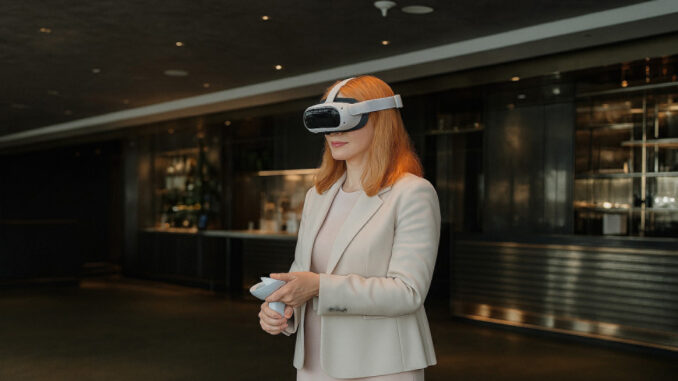
The addition of virtual reality showcases and AI-guided storytelling further extends the reach of events beyond the ballroom. These immersive experiences combine VR headsets, interactive environments, and AI avatars to guide attendees through digital narratives, reflecting the continued evolution of hybrid and experiential event formats.
Four Seasons has not disclosed the underlying technology partners, suggesting the system is built on a combination of third-party AI, translation and immersive media platforms integrated into a unified guest experience. While Four Seasons’ implementation is relatively comprehensive, it is not happening in isolation. Across the hospitality sector, AI has already been deployed in adjacent areas such as guest messaging, concierge services, and personalization. Major hotel groups have introduced chatbots and AI-driven recommendation engines, while operational use cases such as revenue management and demand forecasting have become standard across the industry.
There are also early signs of AI moving into event-specific use cases beyond Kuala Lumpur, though most implementations remain fragmented. What distinguishes the Kuala Lumpur rollout is its attempt to connect multiple capabilities into a single, continuous experience rather than layering isolated tools onto existing workflows. Four Seasons’ positioning of these technologies as optional is also significant. In luxury hospitality, where service expectations are high, the risk of over-automation is well understood. By framing AI as an enhancement rather than a replacement, the hotel reinforces that human service remains central.
This approach is consistent with broader Four Seasons technology initiatives. The company has historically taken a measured path to digital adoption, focusing on mobile app functionality, guest messaging and personalized service delivery rather than aggressive automation. Its mobile app, for example, has emphasized real-time communication with staff, itinerary management, and service requests, reflecting a strategy centered on augmenting human interaction rather than replacing it.
The Kuala Lumpur property’s move also highlights the competitive dynamics of the meetings and events segment. As cities across Asia-Pacific compete to attract international conferences and destination events, technology is increasingly part of the value proposition. Capabilities such as real-time translation and rapid content production can influence venue selection for global organizations managing complex logistics. At the same time, execution remains critical. Event environments are inherently unpredictable, and the integration of multiple technologies introduces additional layers of complexity. Reliability and ease of use will ultimately determine whether these tools deliver meaningful value.
For now, the introduction of AI-driven event tools at Four Seasons Hotel Kuala Lumpur reflects a broader shift rather than a standalone development. Hotels are beginning to explore how AI can support not just efficiency, but engagement and experience design. In a segment where differentiation often comes down to details, the ability to manage complexity while maintaining a sense of ease may prove to be one of the more practical applications of AI in hospitality.