
By Orit Naomi and Lea Mira - 4.22.2026
The hospitality industry likes to talk about sustainability as if it were a breakthrough. What’s actually happening is long overdue: eco-friendly technology is finally being pulled out of marketing decks and forced into the operational core of how hotels run. That shift is real even if it’s also incomplete, uneven, and in many cases, overstated.
For years, sustainability in hospitality has been framed as a virtue signal—something to package into ESG reports and reassure guests about. What’s different now is not the intent but the pressure. Rising energy costs, insurance risks tied to climate exposure and regulatory scrutiny are forcing operators to treat sustainability less like branding and more like infrastructure.
That shift is most visible in energy management. At Hilton, the LightStay platform has evolved over the past decade into a centralized system for tracking and optimizing energy, water and waste across thousands of properties. It’s not particularly flashy, but that’s the point. This is operational plumbing, not guest-facing innovation. Increasingly, similar platforms across the industry are integrating HVAC, lighting and energy data into unified control systems, layering in demand-response capabilities and real-time optimization tied to grid conditions.
The gains are real. The problem is consistency. In a franchised industry, technology adoption is only as strong as the weakest owner in the system. Some properties are running sophisticated, data-driven energy operations. Others are still operating on legacy infrastructure that makes meaningful optimization difficult, if not impossible.
That same gap shows up in how larger groups approach building systems. Marriott International has leaned into connected building platforms and data-driven controls, particularly in newer builds. IoT-enabled room controls and occupancy-based climate systems are becoming more common, and the introduction of digital twin models suggests that things are heading toward simulation-driven optimization rather than reactive fixes.
But again, this is not an industry-wide reality. Retrofitting older hotels is expensive, disruptive and often deprioritized. Integration remains messy. Legacy systems don’t disappear just because a vendor promises a smarter overlay. The result is a patchwork with some hotels are approaching real-time optimization while others are still stuck in manual workflows.
Artificial intelligence is the latest layer being added to this stack and here the narrative gets even more optimistic than the reality. Accor and others are exploring AI-driven energy optimization, using predictive models to fine-tune HVAC performance based on weather, occupancy and booking patterns. Technology vendors are pushing further, offering autonomous systems that adjust building conditions without human input.
In theory, this is where sustainability becomes self-executing. In practice, most of these deployments are still early-stage. Data quality issues persist. Integration costs are high. And proving ROI in a fragmented ownership model remains a challenge. AI may be the future of hotel sustainability, but it is not yet the present for most operators.
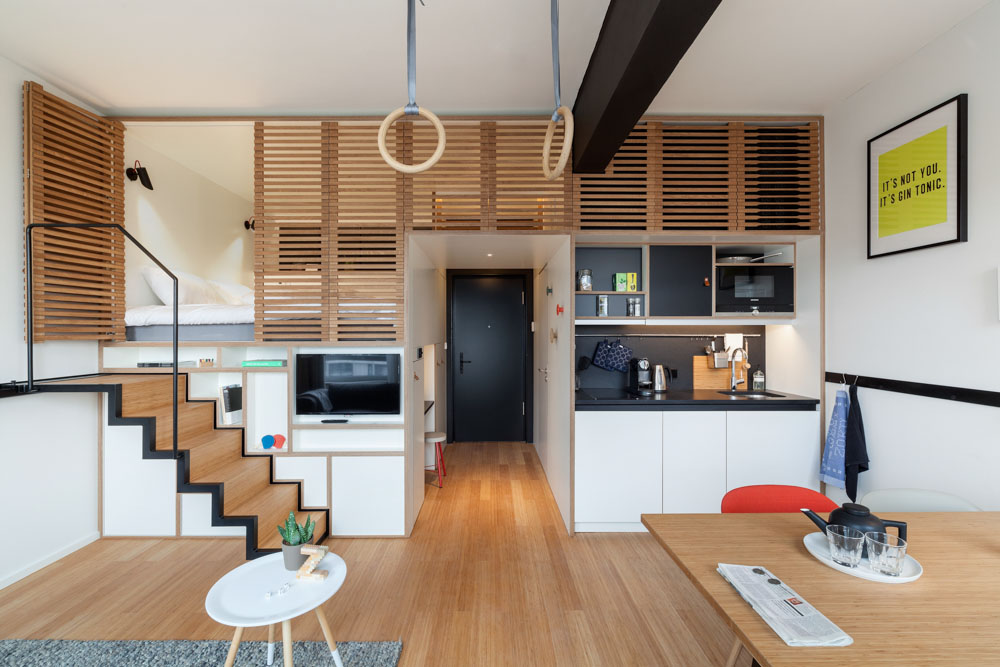
If anything, the most “honest” examples of sustainability innovation are coming from smaller, more controlled environments. Zoku Amsterdam, for example, has built its brand around sustainable urban hospitality, operating on renewable energy and emphasizing transparency in resource use. Properties like this are experimenting with localized energy systems, carbon tracking tools and more direct control over consumption. They also benefit from something most of the industry lacks: alignment. One ownership group, one vision, one technology stack. That’s a very different scenario from scaling sustainability across thousands of franchised properties with varying priorities and budgets.
Water management tells a similar story. Six Senses Zighy Bay has implemented advanced onsite wastewater treatment, greywater reuse and circular systems that significantly reduce reliance on external resources. It’s an impressive model and one that highlights how far the rest of the industry still has to go. These types of systems require capital, space and long-term planning. They are far easier to implement in luxury resorts than in urban, space-constrained hotels operating on tighter margins.
The same dynamic plays out in waste reduction. IHG Hotels & Resorts has expanded AI-enabled food waste tracking across its portfolio, using computer vision and data analytics to reduce overproduction. The technology works. But it only works if staff use it consistently and if operations are disciplined enough to act on the data. That’s not a technology problem. That’s an execution problem.
Circular economy initiatives follow the same pattern. Scandic Hotels has long been ahead of the curve, using digital systems to track resource consumption and reduce waste. But replicating that model globally is far from straightforward. Supply chains vary. Recycling infrastructure varies. Regulatory frameworks vary. What works in Scandinavia doesn’t always translate elsewhere.
Guest-facing technology is often presented as a sustainability win, but here too the impact is more incremental than transformative. Hyatt Hotels Corporation has expanded mobile key capabilities, reducing reliance on plastic keycards. Digital check-in, mobile concierge services, and paperless billing all contribute to lower material usage.
These are meaningful improvements, but they are not where the real environmental gains are happening. The bigger impact remains behind the scenes, in systems that guests rarely see. That’s also where the industry’s biggest limitations are most visible. Data silos remain pervasive. System integration is inconsistent. Many hotels still lack a unified view of how energy, water, waste and occupancy data intersect. Without that, optimization can only go so far.
New builds offer a glimpse of what a more integrated future might look like. 1 Hotel Brooklyn Bridge is often cited as a benchmark, combining reclaimed materials, efficient design, and advanced building systems into a cohesive whole. These projects show what is possible when sustainability is designed in from the start. They also highlight a fundamental constraint: most hotels already exist. Retrofitting the global hotel base is a far more complex challenge than building a handful of high-profile properties from scratch.
The industry’s shift toward “regenerative hospitality” is the latest evolution of the narrative. The idea of using technology not just to reduce harm but to restore ecosystems and support communities is compelling. In practice, most of these initiatives are still exploratory. There are few standardized metrics, limited scalability and a tendency to outpace execution with ambition.
That brings the conversation back to Earth Day. The industry marked it, as it does every year, with announcements, updates and renewed commitments. Some of those commitments are real. Many are incremental. A few are transformative. The more important question is what happens the day after.
Eco-friendly technology in hospitality is no longer optional. It is becoming part of the operational backbone of the industry. But it is not yet a system. It is a collection of systems that are fragmented, unevenly deployed and still evolving. And while there is progress, there is also a long way to go.