

9.13.2026
Karen Bey, Vice President of Global Sales & Channels at FCS Solutions, brings more than 25 years of hospitality and hotel technology experience to her role. After beginning her career in hotel operations, she held positions with MICROS-Fidelio and InterContinental Hotels Group, working across property technology, system implementations, hotel openings and technology standards throughout Asia Pacific. That combination of hotel-side and technology-provider experience has given her a practical understanding of how technology must work for the people using it every day.
In this Spotlight Interview, Bey discusses how hotel technology priorities are changing, the operational challenges hotels most often ask FCS Solutions to address and the thinking behind the browser-based FCS1 In-Room Guest Services platform. She also shares her perspective on digital self-service, connected workflows, automation and AI—and why technology should give hotel employees more time to deliver the personal service that remains at the heart of hospitality.
Could you begin by sharing a little about your professional journey and what led you to your current role as Vice President, Global Sales & Channels at FCS Solutions?
 I have spent more than 25 years in hospitality and hospitality technology, and I have been fortunate to experience the industry from several different perspectives. I started in hotel operations before moving into hotel technology, including roles with MICROS-Fidelio and InterContinental Hotels Group, where I was involved in property technology, system implementations, hotel openings and technology standards across Asia Pacific. Today, at FCS Solutions, I bring that hotel-side experience into conversations with owners, operators, corporate teams and technology partners around the world.
Having been both an operator and a technology provider has shaped my approach. Technology is never just about the technology itself. It is about the people using it, the operational problem it solves and the value it ultimately creates for the hotel.
From your global perspective, how have hotel operators’ technology priorities changed over the past few years?
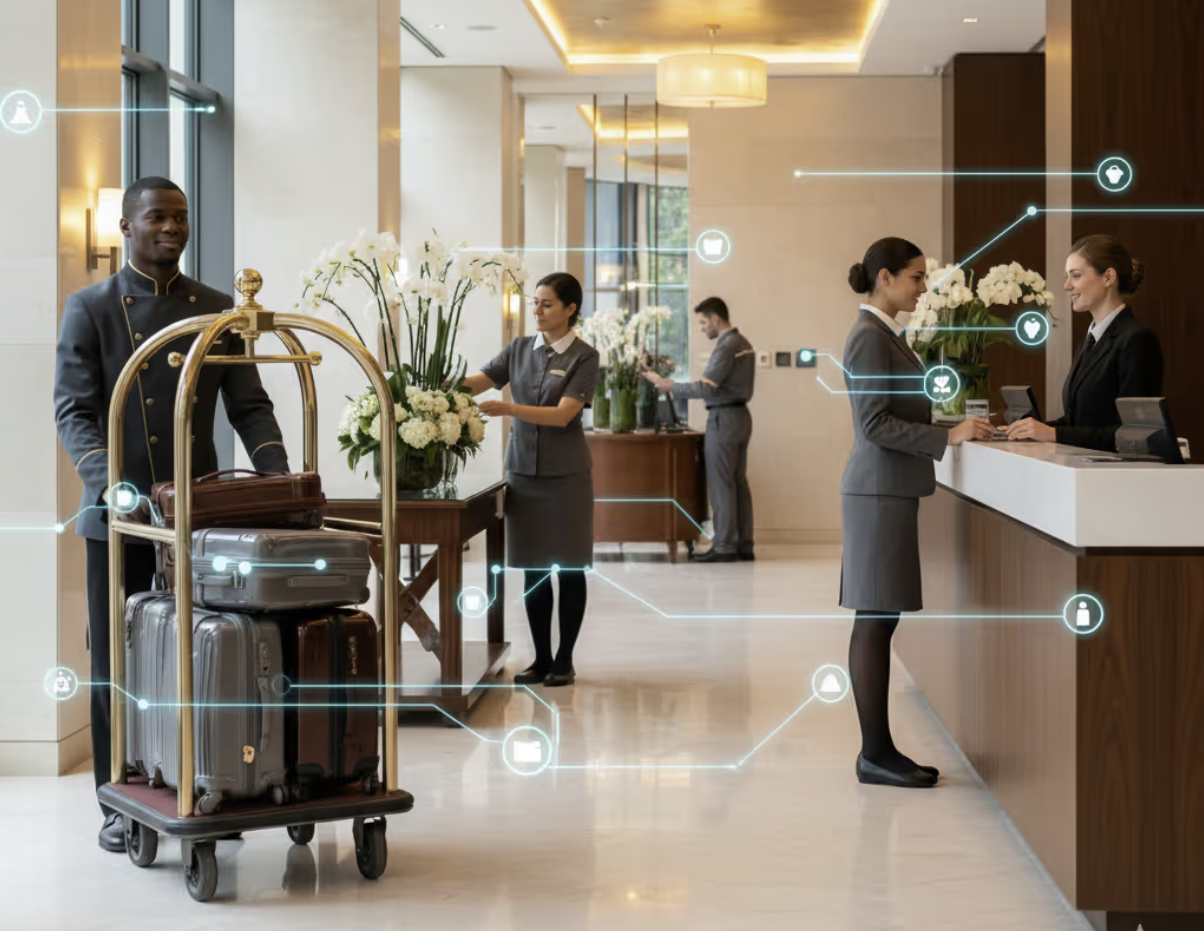
Hotels are becoming much more focused on operational outcomes rather than simply adding technology. For many years, hotels accumulated different systems to solve individual problems. The challenge is that staff can then find themselves moving between applications, communication channels and manual processes just to get their work done. Today, operators are asking much more practical questions: Can the technology connect departments? Can my teams use it easily on the move? Can management see what is happening across the operation? And can it help us deliver better service with the people we already have?
My experience working across very different markets has also shown me that there is no single technology model that fits every hotel. Understanding the local hospitality environment and how a hotel actually operates is critical i.e., adapting technology and partnerships to very different markets rather than assuming that what works in one geography can simply be replicated elsewhere.
What operational challenges are hotels most frequently asking FCS Solutions to help solve today?
A common issue is fragmentation. A guest request might come into one part of the hotel, while the person responsible for fulfilling it works in another department. Housekeeping has its workflows, engineering has another, and guest services may be managing requests through calls, messages or manual handoffs.
Hotels are therefore looking for better visibility and accountability across the entire operation: what needs to be done, who is responsible, whether it has been completed and how quickly the hotel responded. This becomes particularly important when hotels are operating 24 hours a day and teams are constantly balancing guest service, efficiency and commercial pressures.
FCS Solutions has been serving the hospitality industry for more than four decades. How has the company evolved while keeping pace with changing hotel and guest expectations?
FCS started more than four decades ago with Call Accounting and Voicemail solutions, addressing very specific operational needs within hotels. As hotel operations became more complex and guest expectations evolved, so did we—expanding our solutions to support more areas of the hotel operation.
Today, that evolution is reflected in FCS1, our unified, mobile-first, cloud-based platform that brings together key operational functions such as housekeeping, maintenance, guest services and incident management. What has remained consistent throughout is our focus on developing technology specifically for hotel operations.
What was the strategic thinking behind the development of FCS1 In-Room Guest Services, and what gap in the guest journey was the team aiming to address?
We saw a disconnect between the digital guest experience at the front and hotel operations behind it. Guests increasingly expect the convenience of using their own phones to request services, but digitizing the guest interface alone doesn’t necessarily solve the hotel’s operational problem. If the request still needs to be manually transferred to another team or system, you have simply moved the bottleneck.
The thinking behind FCS1 IRGS was therefore to connect the guest directly with the operational workflow. A guest can make a request digitally, and that request can flow into FCS1 Jobs for assignment, tracking and fulfilment. That connection between the guest-facing experience and the hotel’s back-of-house operation is the important part.
Why was a browser-based, QR-code experience chosen instead of requiring guests to download an app?
We wanted to remove as much friction as possible. For a hotel guest staying for a few nights, asking them to download an app, register and learn another interface can be a barrier. With a QR code and browser-based experience, the guest can access the hotel’s services using their own device without having to install anything. It also gives hotels a digital service channel that is easy for guests to access while still connecting into the hotel’s operational workflows.
FCS1 IRGS connects guest requests directly with hotel operations through FCS1 Jobs. How does that change the workflow compared with requests received by phone, messaging channels or manual handoffs?
The biggest difference is that the request becomes actionable immediately. Traditionally, a guest might call the front desk, someone writes down the request, calls another department and then has to follow up to see whether it was completed. Every handoff creates an opportunity for delay or information to be missed.
With IRGS and FCS1 Jobs, the request enters the operational workflow directly. It is routed to the appropriate team, assigned, tracked through completion and made visible to supervisors and management. It changes the process from a series of communications into a managed workflow.
Which guest services and request types are proving most valuable to digitize, and where do hotels typically see the quickest operational impact?
The strongest opportunities for digitization are frequent, routine guest requests that hotel teams handle repeatedly throughout the day. That can include requests for additional towels or mineral water, housekeeping services, maintenance assistance and other common guest-service requests.
These may appear to be simple tasks, but at scale they generate a significant amount of communication and coordination. Digitizing them reduces the number of manual steps required and allows hotel employees to concentrate on fulfilling the request rather than managing the communication around it.
How can hotels introduce digital self-service without making the guest experience feel impersonal or diminishing the role of staff?
Digital self-service should never be about removing hospitality. It should be about removing unnecessary friction. If a guest simply wants another towel, they may prefer to request it in seconds rather than wait on the telephone. But when a guest has a complicated issue, needs advice or wants a recommendation, the human interaction becomes much more important.
The role of technology is therefore to take care of routine transactions and give hotel teams more time for the interactions where their experience, empathy and judgement genuinely add value. That reflects my broader view that hotel technology should always be considered in terms of the people using it and the operational problem it solves.
What have you learned about guest adoption of mobile self-service across different age groups, regions and hotel segments?
One thing I have learned from working across different markets is that we should be careful about assuming every guest behaves the same way. Guest expectations differ by market, hotel segment, purpose of travel and individual preference. That is why digital self-service should provide choice rather than become the only channel.
The aim isn’t to force every guest into a digital journey. It is to give those who value speed and convenience an easy way to access services while maintaining traditional service channels for guests who prefer them. The same principle applies when entering new markets: you need to understand the local hospitality landscape and make the technology relevant to that environment.
How important are multilingual capabilities and accessibility in designing a digital guest-services experience for an international audience?
They are extremely important, particularly for hotels serving international guests. A digital guest service experience should be about convenience, giving guests an easy and intuitive way to access the services they need. Supporting multiple languages helps reduce communication barriers and allows guests to interact with the hotel more confidently. It is also one of the advantages of a digital interface: the experience can be adapted to different guest profiles and markets without changing the hotel’s underlying operational workflow.
FCS1 IRGS is described as customizable. How can a property adapt the experience to reflect its brand, service model and available amenities?
Every hotel operates differently, so IRGS is designed to allow properties to configure the guest-facing experience around the information, services and amenities they actually provide. That means hotels can determine what services are presented to guests and structure the experience to complement their own service model and brand. Importantly, the front-end experience remains connected to FCS1 behind the scenes. So while the guest sees a simple, hotel-specific service experience, the hotel retains the operational workflow needed to manage those requests.
What integrations are most important for creating a seamless flow from a guest request to assignment, fulfillment and follow-up?
The objective should always be to reduce unnecessary handoffs between systems and departments. With FCS1, the important connection is between the guest-facing request and the operational teams responsible for delivering it. IRGS connects into FCS1 Jobs, while the broader FCS1 platform connects workflows across areas including housekeeping and maintenance. The value isn’t the number of integrations a hotel has. It’s whether information moves through the operation on its own, without staff re-keying it or manually relaying it between systems.
How does the platform help prevent missed requests, improve accountability and give managers clearer visibility into service performance?
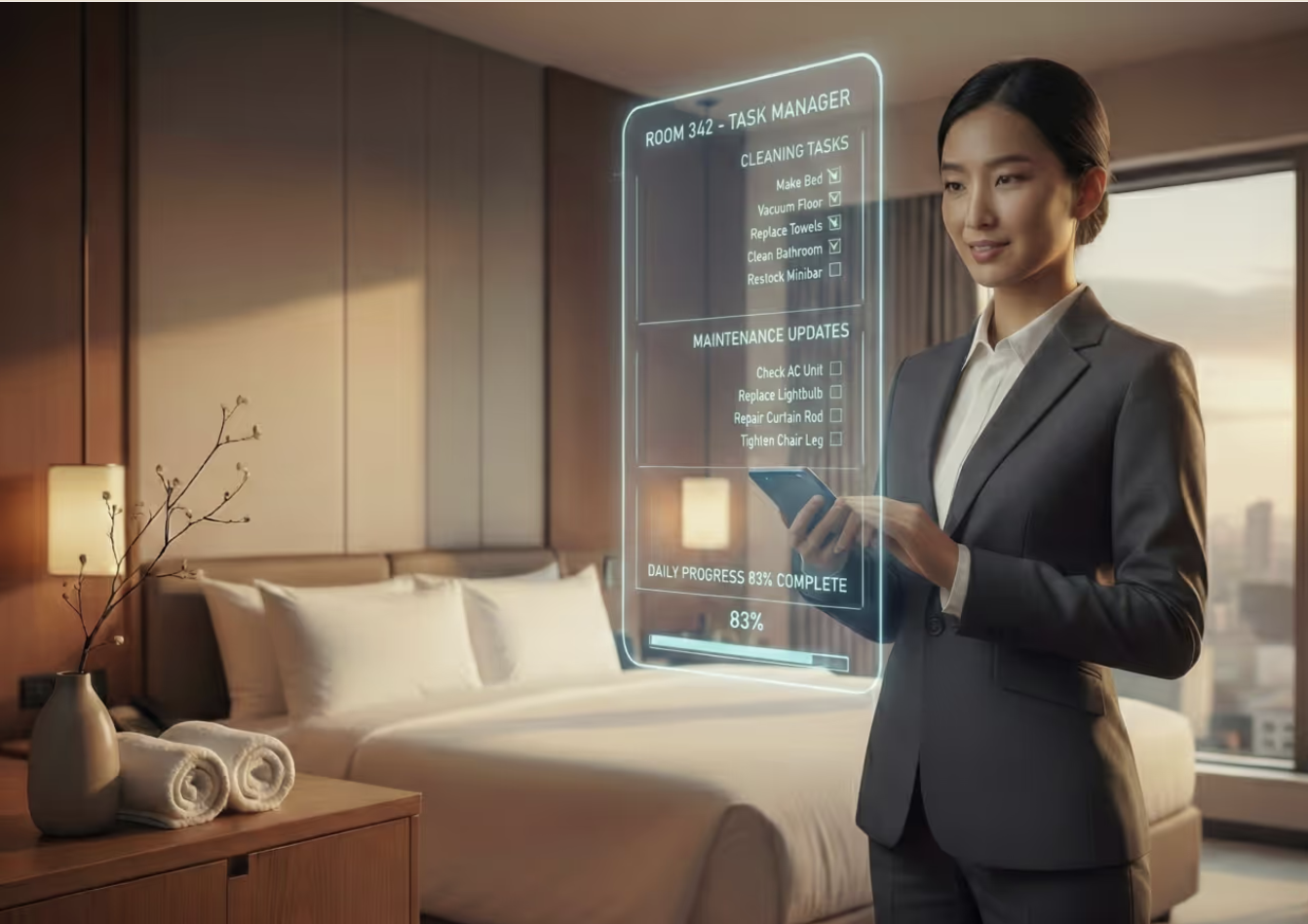 Once a request enters a digital workflow, it’s logged, timestamped and assigned. The hotel can see that the request was made, where it has been assigned, its status and whether it has been completed. That provides accountability for operational teams while also giving supervisors and managers a clearer picture of what is happening across the hotel.
Through the FCS1 dashboard, managers have a real-time view of operational activity across departments, allowing them to quickly see what is outstanding, what is in progress and where attention may be needed. This gives management greater visibility without having to rely on manual updates from individual teams. Over time, that information can also help management identify recurring issues, service bottlenecks and areas where processes could be improved.
Which metrics should hotel leaders track to determine whether a digital guest-services platform is improving efficiency and guest satisfaction?
I would focus on metrics that connect technology to actual operational performance. Response and completion times are important, but hotels should also look at the volume and types of requests, overdue or escalated tasks, recurring service issues and workload patterns across departments. Ultimately, the question should be: Did we respond faster? Did fewer requests get missed? Did our teams work more efficiently? How did we fare in the surveys? And did we create a better experience for the guest?
Can you share an example of how a hotel has improved service delivery or staff productivity using connected operational workflows?
Rather than focus on one property, a common example we see is the removal of manual coordination around everyday guest requests. Imagine a guest requesting an additional amenity. In a traditional workflow, that could involve a phone call to the front desk, a manual message to another department and a subsequent call to confirm completion.
In a connected workflow, the guest’s digital request can become an operational task, be routed to the relevant team and tracked through completion. The productivity gain comes from removing those unnecessary steps while creating visibility throughout the process.
With hotels still facing staffing pressure, where can automation make the greatest difference, and which parts of hospitality should always remain distinctly human?
Automation makes the greatest impact in repetitive coordination—routing tasks, updating statuses, sending notifications, tracking outstanding work and making operational information visible. Those activities are necessary, but they don’t always require the judgement or personal interaction of an experienced hotel employee.
Hospitality itself, however, remains human. Understanding why a guest is unhappy, recognising a special occasion, e.g., an anniversary, making a thoughtful recommendation or knowing when to go beyond the standard procedure. Those are human qualities. Technology should give hotel teams more capacity for those moments, not replace them.
How is FCS Solutions approaching AI within hotel operations, and where do you see the most practical near-term applications?
Our approach is very practical. AI has to solve a genuine operational problem rather than be introduced simply because it is AI. Hotel operations generate a large amount of information through requests, tasks, incidents, maintenance activity and service patterns. Over time, AI can help hotels make better use of that operational data—identifying patterns, surfacing priorities and helping teams make faster, better-informed decisions. For us, the important principle is that AI should support hotel employees and management rather than create another disconnected layer of technology.
What should hotel leaders consider when evaluating the security, privacy and scalability of guest-facing technology?
Hotel leaders should look beyond the guest interface and understand the technology architecture behind it. Data encryption, secure authentication, access controls and data privacy are important considerations, along with how securely the platform exchanges information with other hotel systems.
It is also important to consider how guest data is collected, stored and accessed, ensuring that only the information necessary to deliver the service is captured. From a scalability perspective, the technology should be able to support growing volumes of users, requests and properties while maintaining consistent performance and security.
Hotels should also consider the company behind the technology. Having experienced technical teams, 24/7 local support and people who understand not only the solution but how it fits within the hotel’s wider technology stack can make a significant difference—particularly when issues need to be resolved quickly.
Looking ahead, how do you expect digital guest services and hotel operations platforms to evolve, and what is next on the roadmap for FCS1 IRGS and the broader FCS1 platform?
I think the distinction between “guest technology” and “operational technology” will increasingly disappear. A guest doesn’t think about which hotel department or system is responsible for their request. They simply expect the hotel to respond, and fast. The technology behind that experience therefore needs to connect the guest journey directly with the people and workflows responsible for delivering the service.
For IRGS, the opportunity is to continue developing that connection between the digital guest journey and the broader FCS1 operational platform, making the experience increasingly seamless for both the guest and the hotel team. The direction we are taking with FCS1 is creating a more connected environment where guest services and hotel operations work together rather than as separate technology layers.