
By Dustin Stone, Gavriel Shohet and Lea Mira, HTN staff writers - 6.24.2026
Hotel guests increasingly expect premium food-and-beverage experiences whenever and wherever they want them. Whether arriving late at night, departing before sunrise, working from a lobby lounge, attending a conference or relaxing in a resort common area, travelers have grown accustomed to on-demand convenience and high-quality service. At the same time, hotel operators continue facing labor shortages, rising operating costs and pressure to maximize revenue from every square foot of available space. These realities are driving hospitality organizations to explore new approaches to food-and-beverage delivery that balance guest expectations with operational efficiency.
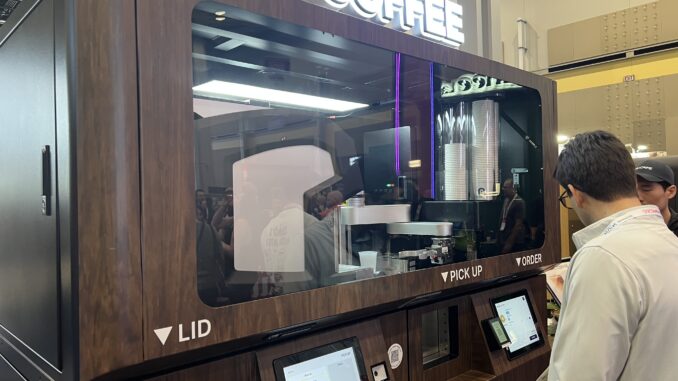
That trend was evident at this year’s National Restaurant Association Show, where exhibitors showcased technologies designed to improve both operational performance and customer experiences. Among them was KioCafé, which demonstrated its autonomous café platform and highlighted a vision for beverage service that extends well beyond the traditional coffee shop model. Rather than focusing solely on robotics, the company emphasized a broader approach that combines automation, IoT connectivity, artificial intelligence, mobile ordering and remote operational intelligence to create self-contained beverage destinations capable of operating with minimal staffing requirements.
The KioCafé story is ultimately about expanding where hospitality organizations can deliver premium beverage experiences. Historically, providing specialty coffee and café-style offerings required dedicated space, trained employees and significant operational oversight. As a result, many hotels limited premium beverage service to specific outlets or operating hours. KioCafé’s autonomous model challenges those constraints by enabling operators to deploy compact, self-service café environments in locations where a traditional coffee operation might not be economically practical.
This flexibility is particularly relevant for hotels. Lobby areas, conference centers, executive lounges, resort activity zones, mixed-use developments, office towers connected to hotel properties and other underutilized spaces can potentially become revenue-generating beverage destinations. Rather than building and staffing a full-service café, operators can deploy autonomous beverage systems designed to provide guests with access to premium drinks throughout the day and night.
At a time when labor remains one of the hospitality industry’s most persistent challenges, the concept has obvious appeal. Hotels continue struggling with staffing shortages across food-and-beverage operations, particularly during overnight hours and lower-demand periods. Autonomous café technology allows operators to extend service availability without proportionally increasing labor requirements. Instead of limiting beverage service to traditional operating schedules, hotels can potentially offer premium coffee experiences whenever guests want them.
What differentiates KioCafé from many automated beverage concepts is its emphasis on connected operations. The company positions its platform as part of a broader autonomous retail ecosystem supported by IoT telemetry, real-time monitoring, artificial intelligence and remote management capabilities. KioCafé describes its approach as creating self-optimizing, self-diagnosing beverage operations that can be monitored and managed from virtually anywhere. This operational visibility allows operators to track performance, monitor inventory, identify maintenance requirements and oversee multiple deployments through a centralized management framework.
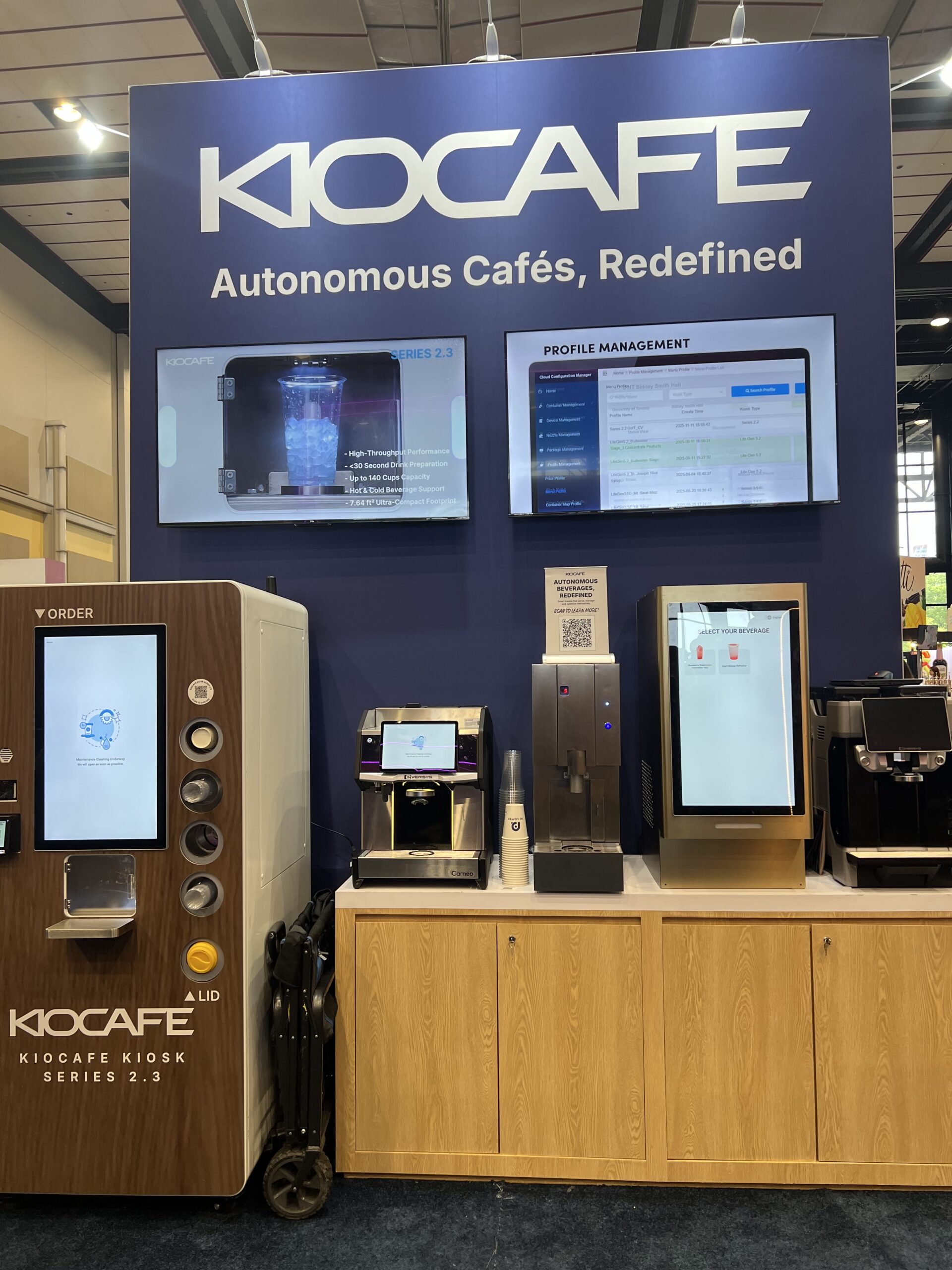
These capabilities reflect broader hospitality technology trends. Hotel operators increasingly seek systems that provide actionable operational intelligence rather than simply automating individual tasks. The ability to monitor equipment health, analyze usage patterns, optimize performance and receive real-time operational insights aligns closely with the industry’s growing emphasis on data-driven decision-making.
Another important aspect of the platform is its ability to support unattended retail environments. Hotels have spent years expanding self-service options through mobile check-in, digital room keys, self-service kiosks, grab-and-go markets and contactless transactions. Autonomous beverage operations represent a natural extension of that strategy, providing guests with greater convenience while reducing operational complexity.
The company’s approach also aligns with changing guest behavior. Travelers increasingly expect the same level of convenience they experience in other aspects of their daily lives. Mobile ordering, contactless payments and self-service transactions have become commonplace. KioCafé extends those expectations into beverage service through connected ordering and payment capabilities designed to simplify the guest experience while maintaining beverage quality and consistency.
The KioCafé mobile application further reinforces this connected ecosystem. Guests can locate participating café installations, place orders, access promotions and complete transactions through a digital interface designed to streamline the purchasing process. For hospitality operators, these capabilities create additional opportunities to engage guests while supporting a seamless beverage experience.
Space utilization presents another compelling opportunity. Hotels often contain areas that generate limited revenue despite occupying valuable real estate. Compact autonomous café installations can help activate those spaces without requiring the footprint, staffing commitments or operational overhead associated with traditional food-and-beverage outlets. For properties seeking to improve revenue per square foot, this can create meaningful new opportunities.
The technology also has potential applications beyond traditional hotel environments. Resorts, convention centers, airports, hospitals, universities, office campuses and mixed-use developments face many of the same challenges related to staffing, convenience and service accessibility. Autonomous beverage platforms provide a way to deliver premium experiences in environments where full-service café operations may not be practical or financially attractive.
The competitive landscape includes robotic beverage systems, self-service coffee solutions and emerging autonomous retail providers. KioCafé differentiates itself through its combination of automation, connectivity, IoT telemetry, artificial intelligence and operational intelligence. Rather than positioning robotics as a novelty, the company focuses on creating scalable beverage operations that can be monitored, managed and optimized remotely.
Perhaps the most interesting aspect of the KioCafé story is what it suggests about the future of hospitality food-and-beverage operations. Hotels are increasingly looking beyond traditional service models and exploring new ways to deliver convenience, generate revenue and enhance guest experiences. Autonomous retail technologies provide a potential pathway toward those goals while helping address some of the industry’s most persistent labor and operational challenges.
As hospitality organizations continue evaluating how technology can improve both efficiency and guest satisfaction, beverage service represents a promising area for innovation. By combining automation, autonomous retail, mobile ordering, artificial intelligence and connected operational intelligence, KioCafé is helping expand where and how premium beverage experiences can be delivered. For hotels seeking to serve guests more effectively while operating more efficiently, that capability may become increasingly valuable in the years ahead.