
By Christopher Tiessen, President/CEO, KLAUS Multiparking America - 8.21.2025
As mobility trends evolve faster than most building codes can keep up, hotel parking has emerged as a critical area of strategic planning. What once functioned as a basic operational necessity is increasingly becoming a tool for guest experience, asset flexibility, and long-term profitability.
The challenge? Hotels built today must anticipate parking needs that may look radically different in five to ten years. Between the rise of electric vehicles (EVs), autonomous transport, ride-sharing, and micro-mobility, the traditional stall-count model is rapidly becoming outdated. The question for hospitality developers isn’t whether transportation is changing, it’s whether their parking will be ready for it.
Rethinking Design Assumptions
Historically, parking design was straightforward: meet zoning minimums, add valet where appropriate, and move on. But new guest behaviors, especially in urban hotels, mixed-use resorts, and branded residences, demand parking solutions that are smarter, more adaptable, and more revenue-conscious.
Rigid layouts based on fixed ratios may soon limit operational flexibility. Instead, hospitality projects must design for multi-modal integration, modularity, and scalable technology from the outset.

EV Charging Must Scale with Demand
The shift to electric vehicles is not really a distant possibility, it’s already reshaping guest expectations. Travelers increasingly assume access to EV chargers during overnight stays or longer visits. Retrofitting parking garages to accommodate EV infrastructure later is both costly and disruptive. Planning for scalable integration now, through sufficient conduit, panel capacity, and smart load-balancing systems, is essential.
EV-ready design should also account for guest engagement. Seamless payment, compatibility with loyalty programs, and integration with property management systems all play a role in elevating the guest experience.
Parking That Can Evolve
One of the most overlooked aspects of future-proofing is spatial flexibility. Parking areas may one day need to support other functions entirely, whether it’s last-mile logistics, micro-mobility hubs, or social amenities.
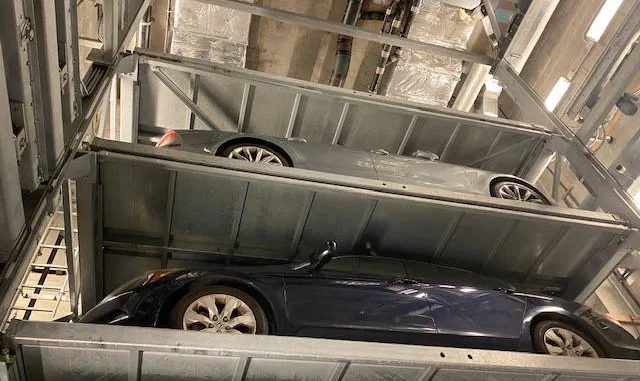
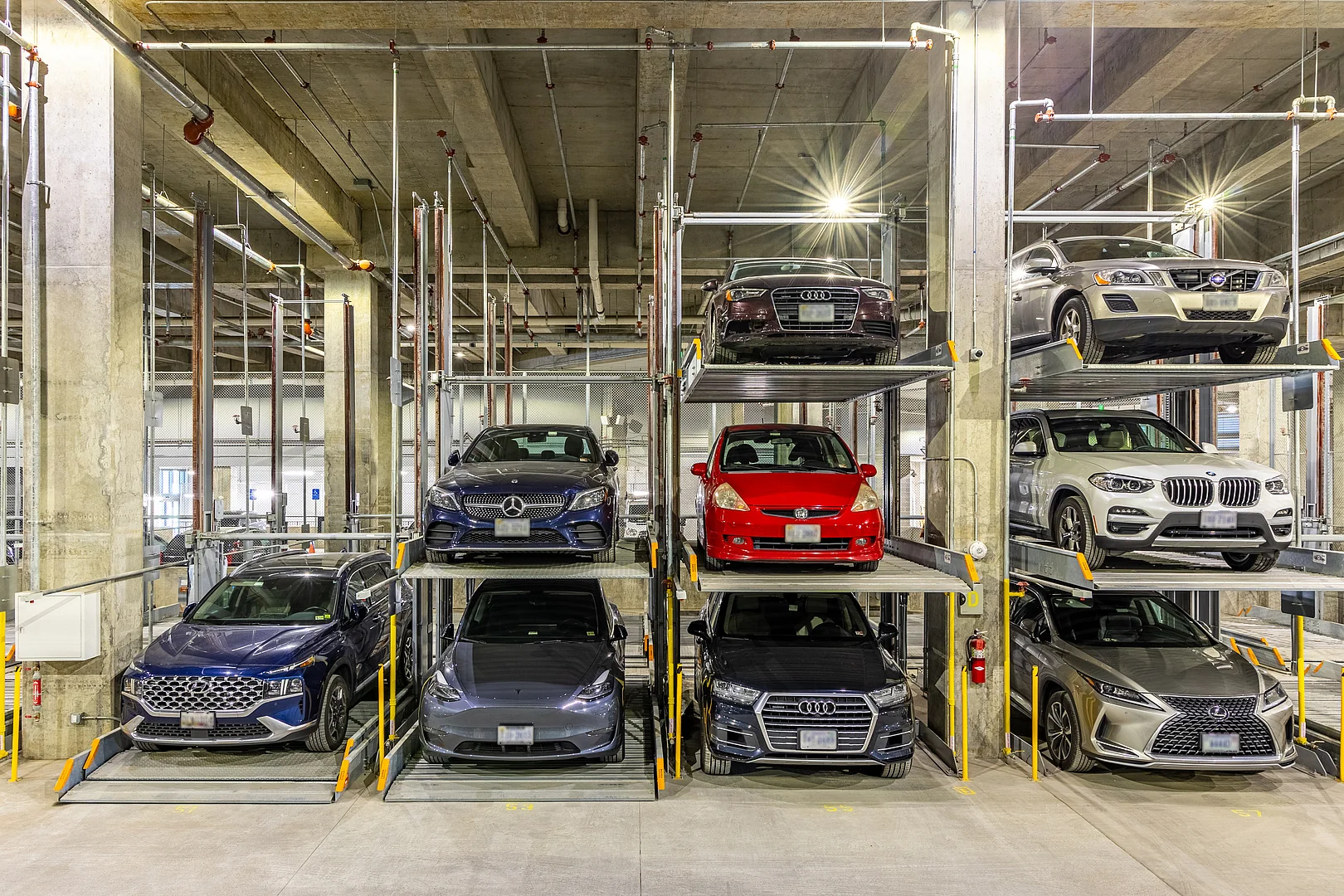
Mechanical and semi-automated parking systems offer an alternative to the permanent rigidity of ramps and wide circulation aisles. Systems like stackers or puzzle platforms condense vehicle storage into smaller footprints, freeing up land or structure volume for guest-facing uses. Importantly, these designs also support future conversion: a garage built today with modular components may serve a completely different purpose a decade from now, without requiring full demolition.
Preparing for Autonomy and Shared Mobility
Autonomous vehicles (AVs) are no longer confined to concept labs. While full AV integration may still be years away, forward-looking hotels are starting to adapt their designs. That includes considerations for AV pick-up and drop-off zones, centralized valet areas that can support automated retrieval, and layouts that avoid future conflicts between autonomous and manually driven vehicles.
Similarly, the ongoing growth of ride-sharing calls for designated staging areas, app-based coordination, and traffic management strategies that minimize guest wait times and congestion at entry and exit points.
Hospitality Parking as a Guest Experience
For many guests, parking is the first and last interaction they’ll have with a property. Delays, unclear signage, or inefficient valet workflows can leave a lasting impression. Hotels investing in parking automation—such as license plate recognition, digital wayfinding, or automated vehicle retrieval—are improving both guest satisfaction and operational efficiency.
These tools can also support new staffing models. For properties facing labor shortages or aiming to reduce headcount, automating the parking process (while preserving a premium experience) can be a practical solution.
Adaptive Systems Unlock Long-Term Value
A growing number of hospitality projects are now integrating mechanical systems not just for efficiency, but for long-term adaptability. For example, properties located near major airports are increasingly exploring off-airport parking as a recurring revenue source.
With the right design and systems, a valet-assisted mechanical parking deck can serve both guests and non-guests, generating income well beyond room nights. Smart stacking or semi-automated retrieval allows hotels to more than triple vehicle capacity within the same footprint, supporting higher demand during peak travel or events.
One hotel near Fort Lauderdale Beach, facing site and zoning constraints, used a compact mechanical stacker system to increase parking efficiency nearly threefold—without expanding its above-grade profile or compromising valuable ocean-facing amenities. The system supported valet operations and allowed the property to dedicate more space to revenue-generating areas like rooms, spa facilities, and dining.
Key Planning Considerations
Future-proofed hotel parking isn’t about predicting every new trend, it’s about building flexibility into the structure itself. That includes:
- Planning EV infrastructure that can scale as adoption increases
- Minimizing fixed elements like ramps and wide drive aisles
- Using modular parking systems that can adapt or convert over time
- Designing for AV and ride-share integration before retrofits are needed
- Aligning parking design with brand-level guest experience goals
Ultimately, hotels that view parking as a dynamic asset, rather than a static utility, will be best positioned to serve tomorrow’s travelers.
The transportation revolution is already reshaping hospitality design. What’s uncertain is which properties will rise to meet the moment. Hotels that integrate adaptable, intelligent parking solutions today won’t just accommodate evolving mobility, they’ll create lasting value for both guests and ownership.
Because in the end, future-ready parking isn’t just about vehicles. It’s about vision.
 Christopher Tiessen is the President and CEO of KLAUS Multiparking America, where he leads the U.S. subsidiary of the global parking systems leader, KLAUS Multiparking GmbH. With extensive experience in the parking and car-stacking industry, he collaborates with various stakeholders to create innovative parking solutions that address urban and suburban challenges. His leadership emphasizes strategic planning and effective communication, aiming to expand the company’s market presence while maintaining high-quality service. Christopher is dedicated to advancing smart, sustainable parking solutions that maximize space efficiency and add value to real estate developments, ultimately enhancing urban mobility in American cities.
Are you an industry thought leader with a point of view on hotel technology that you would like to share with our readers? If so, we invite you to review our editorial guidelines and submit your article for publishing consideration.