
By Orit Naomi, HTN staff writer - 3.19.2026
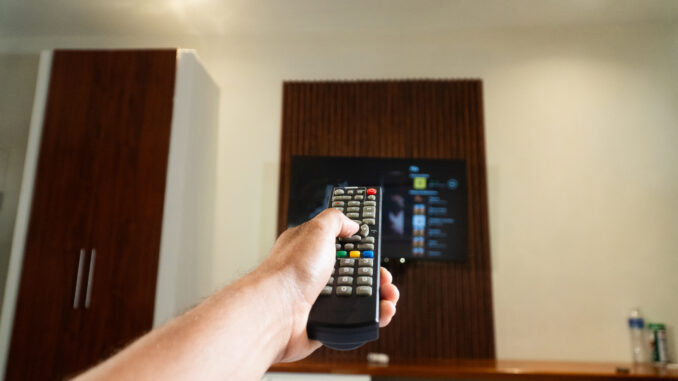
In-room entertainment has long been a defining element of the hotel guest experience, but for many travelers it has become more of a frustration than a feature. The familiar ritual of scrolling through dozens of cable channels in search of something watchable increasingly ends with the TV being turned off altogether. Instead, guests reach for their own devices, where content is personalized, on demand and instantly accessible. This behavioral shift is forcing hotels to rethink not just what they offer on screen, but the role the television plays in the room itself.
What we are seeing now is a structural change. Hotels are moving away from legacy cable systems toward smart hospitality TVs that support streaming platforms, app ecosystems and seamless casting. The integration of over-the-top services like Netflix, Hulu and Disney+ is fundamentally changing how guests engage with in-room entertainment. It transforms the experience from passive and limited to interactive and familiar, aligning far more closely with how people consume media at home.
This shift is being driven by guest demand. According to the J.D. Power 2025 North America Hotel Guest Satisfaction Index, 40% of guests now consider streaming capability a must-have amenity, and a majority actively use smart TVs during their stay. That expectation cuts across segments, from business travelers who want continuity with their routines to leisure guests who increasingly view the hotel room as an extension of their living space. In that context, a television that only offers cable channels can subtly signal that a property is out of step with modern expectations.
Technology providers have responded quickly. Manufacturers like Samsung, LG and Philips have all expanded their hospitality TV portfolios to include native OTT apps, casting capabilities and enterprise management platforms. At the same time, companies such as Enseo, SONIFI and World Cinema are building the software layers that enable secure streaming, device pairing and content delivery at scale. The result is a more complex but also more flexible ecosystem, where the value is no longer defined solely by the screen on the wall but by the experience it delivers.
Samsung has been particularly aggressive in this space, positioning its hospitality TVs as part of a broader enterprise platform. Its models integrate streaming apps alongside live television and support casting via Apple AirPlay and Google Cast, creating a familiar user experience for guests. The company’s Tizen-based infrastructure and LYNK Cloud platform also give operators tools for centralized management, analytics and in-room messaging. That combination of hardware, software and operational control has helped Samsung maintain a strong foothold across branded hotel portfolios.
At the same time, the competitive landscape is evolving in ways that challenge any single-vendor dominance. LG’s Pro:Centric platform emphasizes customization and deep integration with property management systems, while Philips has leaned into Android-based flexibility with its MediaSuite line, appealing to operators who want access to a broader app ecosystem. Meanwhile, middleware providers are increasingly abstracting the hardware layer, allowing hotels to deploy consistent guest experiences across different TV brands. This shift suggests that long-term differentiation may depend less on the television itself and more on how well the entire system is integrated.
For hotel operators, the decision to upgrade is no longer just about replacing aging equipment. It requires a holistic evaluation of infrastructure, security and long-term scalability. Streaming at scale places significant demands on network performance, and without robust, high-bandwidth Wi-Fi, even the most advanced TV will fall short of expectations. Security is equally critical, as guests need confidence that their personal streaming credentials are protected and automatically cleared after checkout. Integration with existing systems, from PMS platforms to mobile apps, is also essential if hotels want to unlock the full value of these technologies.
That value extends beyond guest satisfaction. Smart hospitality TVs are increasingly being used as revenue-generating tools, enabling targeted promotion of on-property services such as dining, spa treatments and upgrades. They also provide insights into guest behavior that can inform marketing and operational decisions. In this sense, the television is evolving from a static amenity into a dynamic engagement platform, one that sits at the intersection of experience, operations and revenue.
What is clear is that guests no longer compare the hotel TV to other hotels. Rather, they compare it to their own living room. Meeting that expectation requires more than adding a few streaming apps. It demands a cohesive, reliable and intuitive experience that feels effortless from the moment the guest enters the room. Hotels that get this right position themselves as modern and guest-centric, while those that do not risk reinforcing a perception of being outdated.
In-room entertainment is unlikely to disappear as a touchpoint, but its purpose is changing. It is no longer about filling time with whatever happens to be on. It is about giving guests control, familiarity and a sense that the room has been designed around how they actually live. In a competitive hospitality landscape where small details shape overall perception, that shift may prove more important than the screen itself.