
By Lea Mira, staff writer - 3.29.2026
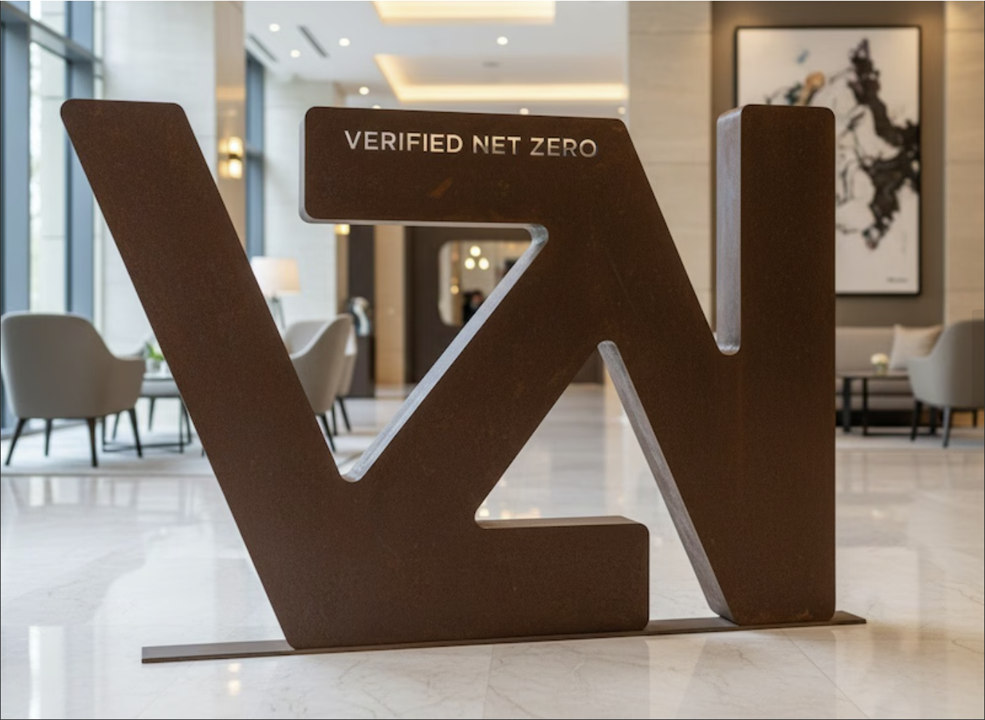
Radisson Hotel Group is moving aggressively to translate sustainability ambition into operational reality, announcing plans to scale its Verified Net Zero (VNZ) Hotels program from a limited pilot to 100 properties globally by 2030. The initiative, unveiled at International Hospitality Investment Forum 2026, reflects a broader shift across hospitality as brands confront the practical, technical, and financial implications of decarbonization.
What distinguishes Radisson’s approach is its emphasis on existing assets rather than new builds. While many sustainability efforts in hospitality have focused on future development, the vast majority of the global hotel inventory is already built. Retrofitting these properties presents a far more complex challenge, requiring not just incremental efficiency gains but structural changes to how buildings are powered, monitored, and managed in real time.
At the core of the VNZ program is a strict technical framework that targets the elimination of Scope 1 and 2 emissions. In practical terms, that means removing onsite fossil fuel use entirely. Gas-powered systems, long a staple in hotel operations, are replaced with electrified alternatives, including air-to-water heat pumps for heating and hot water, as well as induction-based kitchen systems. These changes are paired with renewable electricity sourcing, either through direct procurement or grid decarbonization where available.
 But the shift to electrification is only part of the story. Making these systems efficient, resilient, and scalable requires a significant layer of digital infrastructure. Advanced building management systems (BMS) are central to this transition, enabling hotels to orchestrate heating, cooling, ventilation, and energy consumption dynamically. Instead of static schedules, systems can respond to real-time occupancy, weather conditions, and energy pricing signals, optimizing performance minute by minute.
Energy management platforms are becoming equally critical. These systems aggregate data from across the property—HVAC systems, kitchen equipment, lighting, and guest rooms—to provide a unified view of consumption patterns. With that visibility, operators can identify inefficiencies, benchmark performance across properties, and implement targeted improvements. In a net-zero context, where margins for waste are minimal, this level of insight is essential.
The integration of Internet of Things (IoT) sensors further enhances this capability. Smart meters, occupancy sensors, and equipment-level monitoring devices generate continuous streams of data that feed into centralized platforms. For example, occupancy-based controls can automatically adjust heating and cooling in guest rooms, while predictive maintenance algorithms can flag underperforming equipment before it leads to energy waste or operational disruption.
In many cases, artificial intelligence and machine learning models are layered on top of these systems to drive continuous optimization. These models can analyze historical and real-time data to forecast demand, adjust system performance, and recommend operational changes. For instance, AI-driven load balancing can help hotels manage peak electricity demand, reducing costs while maintaining guest comfort.
The program is independently verified by TÜV Rheinland and aligned with the Science Based Targets Initiative, signaling an effort to move beyond marketing claims toward measurable, auditable outcomes. That verification increasingly depends on digital data trails. Automated reporting systems capture emissions data, energy usage, and system performance, enabling continuous compliance and simplifying the reporting burden for owners and operators.
Radisson’s pilot properties in Manchester and Oslo served as test cases not only for the technical feasibility of electrification but also for the integration of these digital systems. Early learnings highlighted the importance of interoperability between platforms. Legacy systems often operate in silos, making it difficult to achieve the holistic optimization required for net-zero operations. As a result, integration layers and open APIs are becoming a key focus, allowing data to flow seamlessly between systems.
This approach is emerging within a broader competitive landscape where major global hotel brands are pursuing similar, though often differently structured, pathways to net zero. Hilton has aligned its operations with science-based targets and is investing heavily in energy efficiency, renewable energy adoption, and data-driven sustainability platforms to reduce emissions across its portfolio. Marriott International has committed to achieving net-zero emissions across its value chain by 2050, supported by internal systems that track carbon, water, and waste performance across thousands of properties.
Meanwhile, IHG Hotels & Resorts is experimenting with fully net-zero properties such as its voco Zeal Exeter Science Park hotel, which operates entirely on renewable energy and incorporates advanced building technologies like heat pumps and solar-integrated design . Across the sector, brands including Accor have also set long-term net-zero targets, often tied to broader ESG and financial strategies .
The key distinction is that many of these initiatives have historically focused on new construction, flagship properties, or long-term corporate targets. Radisson’s VNZ program, by contrast, is explicitly designed as a scalable retrofit model for existing assets, supported by a standardized technical and verification framework.
The next phase of rollout, beginning in 2026, will focus on the UK, the Nordics, and South Africa—regions that offer a mix of regulatory pressure, energy infrastructure readiness, and owner appetite for sustainability investments. Each market presents unique challenges, from grid reliability to energy pricing structures, further underscoring the need for adaptable, software-driven solutions.
For hotel owners, the value proposition extends beyond environmental impact. Regulatory pressure is intensifying across key markets, particularly in Europe, where carbon reporting requirements and building performance standards are becoming more stringent. Properties that fail to meet these standards risk not only higher operating costs but also reduced asset value and potential obsolescence. By providing a defined pathway to net zero, Radisson is effectively offering a form of future-proofing.
There is also a growing commercial dimension. Corporate travel programs increasingly incorporate sustainability criteria into supplier selection, and investors are placing greater emphasis on ESG performance in portfolio decisions. Hotels that can demonstrate verified emissions reductions, supported by transparent and auditable data, may gain a competitive advantage in both areas.
Operationally, the transition introduces new complexities. Electrified systems require different maintenance protocols, and staff must be trained to work with new technologies. Digital tools can help bridge this gap. Mobile maintenance platforms, augmented reality diagnostics, and remote monitoring capabilities allow engineering teams to manage more sophisticated systems with greater efficiency. In some cases, centralized command centers can oversee multiple properties, leveraging data analytics to standardize performance across a portfolio.
The shift also has implications for the broader hotel technology stack. Integration with property management systems (PMS), revenue management systems (RMS), and guest-facing applications opens the door to more holistic optimization. For example, occupancy forecasts from RMS platforms can inform energy management strategies, while guest preferences captured in PMS systems can be used to balance comfort with efficiency.
Radisson’s target of 100 verified net-zero hotels by 2030 may appear ambitious, but it reflects the pace at which sustainability expectations are evolving. What was once a differentiator is quickly becoming a baseline requirement. The ability to scale a standardized, technology-enabled, and verified approach across multiple markets could prove to be a critical advantage.
More broadly, the initiative signals a shift in how hospitality companies are approaching sustainability. Rather than treating it as a standalone initiative, leading brands are embedding it into core asset strategy, technology investment, and operational design. As that trend continues, programs like VNZ are likely to play a central role in defining what a “future-ready” hotel looks like.
For the industry, the implications extend well beyond a single brand. If Radisson’s model proves scalable, it could serve as a template for retrofitting existing hotel portfolios worldwide, accelerating the transition to lower-carbon operations at a time when incremental change is no longer sufficient.