

By Lea Mira - 7.29.2026
Wyndham Hotels & Resorts has moved its guest-facing artificial intelligence program well beyond the pilot stage. More than 5,000 hotels now use Wyndham Connect, the company’s AI-enabled guest engagement platform, while Wyndham AI Concierge, a premium product that handles calls, messages and reservations, is operating at approximately 1,500 properties.
CEO Geoff Ballotti disclosed the deployment figures during Wyndham’s July 23 earnings call. The company’s use of AI was one part of a broader second-quarter update that included improving U.S. hotel demand, record room openings and a higher full-year outlook. Hotel Dive first reported the earnings developments and Ballotti’s comments on changing travel-search behavior.
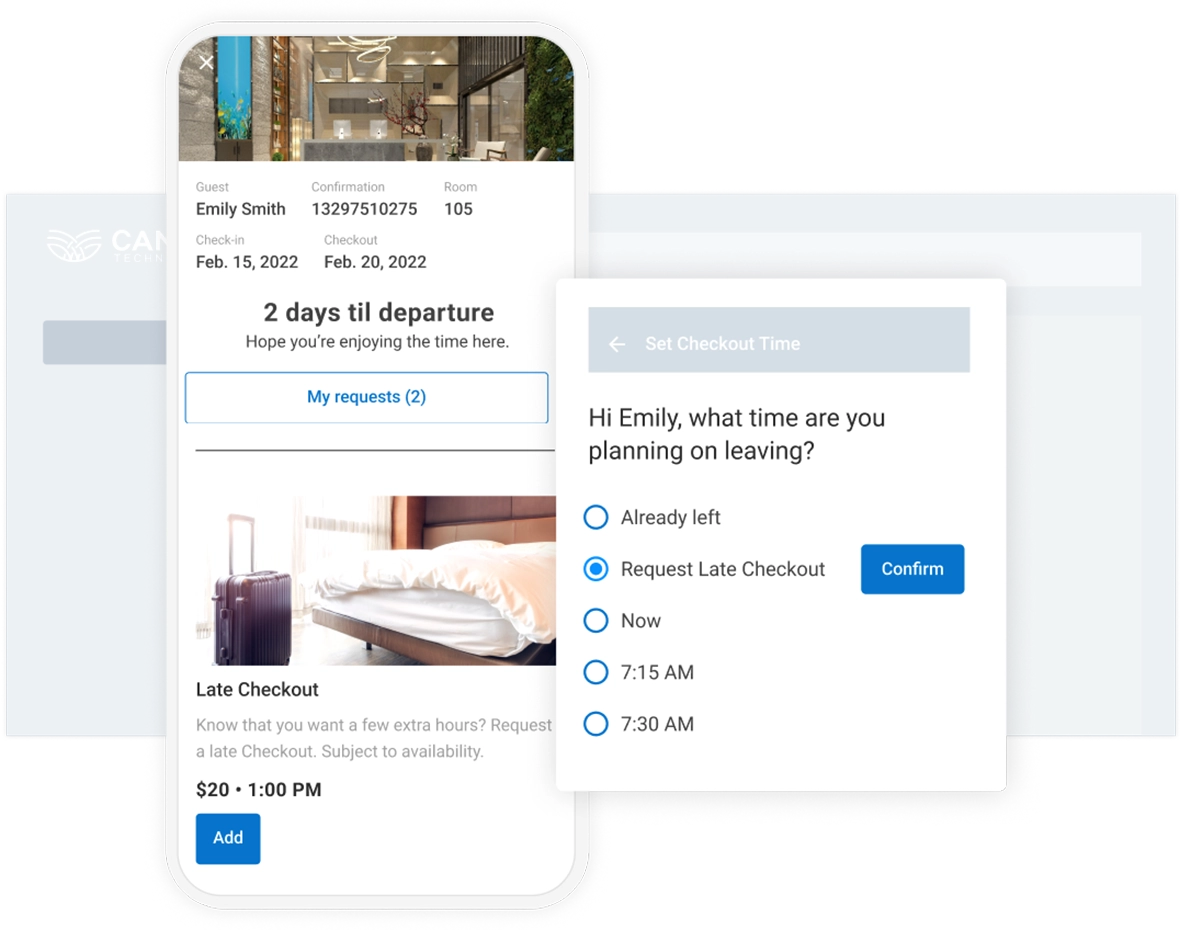
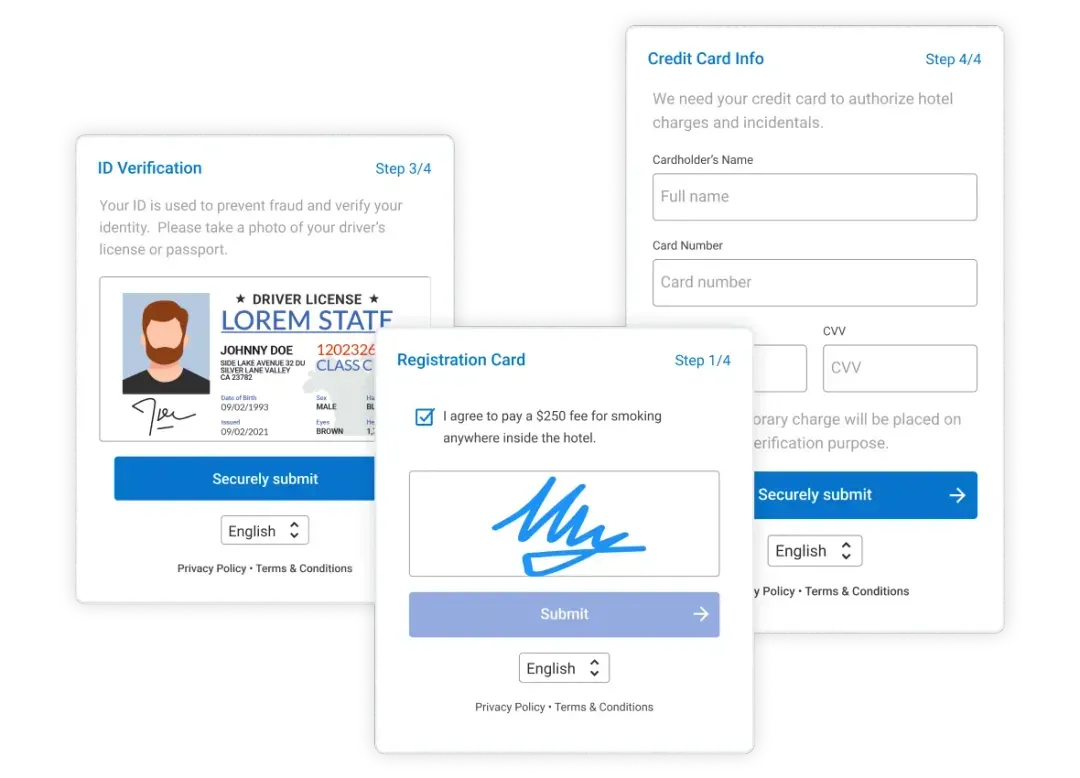 Wyndham Connect has now handled more than 40 million guest messages and is averaging approximately 260,000 interactions per day, Ballotti told analysts. Hotels use the platform to communicate with guests and sell services such as early check-in, late checkout and room upgrades without requiring an employee to manage every exchange.
The scale is notable in a hotel industry where many AI announcements still involve limited trials or a small number of showcase properties. Wyndham operates approximately 8,400 hotels across about 100 countries, most of them independently owned and concentrated in the economy and midscale segments. More than half of the company’s system is now using Wyndham Connect.
Those hotels often operate with lean staffing models. A front-desk employee may be checking in a guest, answering the telephone and responding to a service request at the same time. Automating a routine question or presenting a paid checkout extension can have more immediate value in that environment than it would at a full-service hotel with dedicated reservations and concierge teams.
Wyndham introduced Connect across North America in 2024 through a partnership with Canary Technologies. Nearly 2,000 hotels had started using the system at the time of the initial rollout. The base platform includes mobile check-in, digital checkout, guest messaging and dynamic upselling. Wyndham made it available to franchisees without an additional technology charge, reducing the cost barrier that often slows adoption across a franchised hotel system.
The company expanded the program in 2025 with Wyndham Connect PLUS, adding automated text messaging, voice assistance and self-service arrival functions. Wyndham initially allowed qualified franchisees to pilot the enhanced platform without an additional charge through the end of that year.
During the latest earnings call, Ballotti separately described Wyndham AI Concierge as a premium add-on that handles direct-to-hotel voice calls, messages and SMS conversations. The system can answer questions and book reservations without transferring the guest to a hotel employee. It uses Salesforce and Data 360 to draw on information that can include a customer’s reservation history and loyalty status.
 Voice reservations present a practical use case for limited-service hotels. Calls are easily missed when the front desk is occupied, particularly during arrival periods. A caller who receives no answer may book another hotel or turn to an online travel agency.
Wyndham says the AI Concierge can eliminate dropped calls and improve the share of reservations that flow through its direct channels. Ballotti told analysts that participating hotels have recorded increases of as much as 500 basis points in direct contribution and that reservations completed autonomously have produced average daily rates 15% higher than reservations taken by telephone.
Those results were reported by Wyndham and have not been independently verified. The company has not published the number of reservations included, the comparison period or the characteristics of the participating hotels. The figures nevertheless show how Wyndham is presenting the product to franchisees: as a revenue and labor tool rather than a customer-service novelty.
The same sales argument applies to Wyndham Connect’s automated upsells. Ballotti said highly engaged franchisees have generated $100,000 or more in additional revenue by selling early arrivals, extended departures and upgrades. In a May product announcement, Wyndham said its most active hotels averaged more than $60,000 in incremental revenue during the previous year, with the top-performing property exceeding $200,000.
The difference between the two figures reflects the way Wyndham has described results at different times. The $60,000 figure was an average for the most engaged hotels during the prior year. The $100,000 figure was Ballotti’s more recent description of what some engaged franchisees are now generating. Neither should be read as the expected return for a typical property.
Results will vary widely by hotel. A busy airport property may have considerable demand for early check-in and late checkout. A roadside economy hotel may receive more telephone reservations but have fewer guests willing to pay for upgrades. Revenue also depends on how actively the owner configures and promotes the available offers.
Earlier data supplied by Wyndham showed more modest, system-oriented gains. In January, the company said hotels using Wyndham Connect PLUS averaged an improvement of nearly 200 basis points in direct voice conversion and 400 basis points in overall guest satisfaction. Those numbers also came from Wyndham and were not accompanied by a detailed methodology.
The technology program is closely tied to Wyndham’s franchise model. The company does not operate most of the hotels carrying its brands. Its growth depends on persuading owners that Wyndham’s distribution, loyalty program, technology and support services justify their franchise fees. An AI platform that generates paid upgrades or captures missed reservations gives the company another way to make that case. It also allows Wyndham to provide capabilities that many independent hotel owners would struggle to evaluate, integrate and maintain on their own.
Wyndham’s 2026 Owner Trends Report found strong interest in AI but considerable uncertainty about implementation. Seventy-three percent of surveyed hotel owners and developers said they wanted to do more with AI but felt overwhelmed or unsure where to begin. The most commonly cited barriers were privacy and security concerns, investment costs and the difficulty of connecting new tools with legacy systems. The survey was conducted by Wakefield Research among 325 hotel owners and developers in the United States, Canada and the Caribbean. Respondents represented multiple brands and hotel companies and were not limited to Wyndham franchisees.
Nearly nine in ten respondents said working with a hotel brand was beneficial when implementing AI, while 34% considered brand support essential. That finding supports Wyndham’s decision to provide a standardized platform rather than leave each owner to choose a separate messaging, voice and upselling vendor. Standardization comes with its own complications. The system must understand local hotel policies, room configurations, fees and amenities accurately. A wrong answer about parking, pet restrictions, cancellation terms or accessibility will eventually be handed back to the property to resolve.
The number of daily interactions also raises the consequences of small error rates. A system that performs correctly 99% of the time would still produce thousands of problematic exchanges if it handles 260,000 conversations a day. Wyndham has not disclosed detailed accuracy, escalation or complaint rates for the platform. Owners evaluating the premium service will need more than aggregate revenue claims. They will want to know how many calls convert, how frequently guests request a human employee, how disputed reservations are handled and whether automated sales create additional refund or service-recovery costs.
The company’s AI strategy now begins before the guest contacts a hotel. In May, Wyndham launched a native app inside ChatGPT, allowing travelers to search approximately 8,400 Wyndham properties through natural-language prompts, maps, amenity filters and hotel cards. The app presents current Wyndham hotel information and then sends the traveler to WyndhamHotels.com to complete the reservation. Wyndham previously connected its inventory with Anthropic’s Claude and has said it is also working toward an integration with Google’s AI Mode.
Ballotti told analysts that roughly 60% of travel searches by Wyndham guests now take place within a large language model for inspiration, research or itinerary building. The company has not disclosed how it calculated that estimate, so it is best treated as Wyndham’s assessment of customer behavior rather than a broader industry benchmark.
Wyndham also said visitors referred to its website by an AI platform are converting at a rate 20% higher than other website traffic. The company did not publish referral volumes or explain which traffic sources were included in the comparison.
A higher conversion rate would not be surprising. Someone who reaches a specific hotel after discussing location, price and amenities with an AI assistant may be further along in the buying process than a visitor arriving through a broad search query. The more important question is whether AI assistants are creating incremental direct bookings or simply redirecting demand that would have reached Wyndham through another channel.
The distinction matters to hotel owners because direct reservations generally carry lower distribution costs than bookings delivered by online travel agencies. If Wyndham can place its real-time rates and room inventory inside AI search results and still complete the transaction on its own website, franchisees may gain access to a new source of demand without paying OTA commissions.
The risk is familiar. Hotel companies have spent years trying to manage their dependence on search engines and online travel agencies. Large language models could become another intermediary with influence over which properties are shown and which are omitted. Wyndham is responding by putting its own data and booking links inside the platforms rather than relying on information scraped from public websites. Ballotti said the company can supply real-time rates, inventory and guaranteed room types that may not be available from cached third-party content.
Other hotel groups are moving in the same direction. IHG Hotels & Resorts has launched an IHG app in ChatGPT and conversational search within its own website and mobile app. Radisson Hotel Group introduced a ChatGPT hotel-discovery app with Accenture, while Hilton placed its Hilton AI Planner within Hilton.com. Wyndham’s program differs in the amount of attention it gives to the hotel after discovery. The company now has AI involved in search, direct booking, pre-arrival communication, paid upgrades, on-property questions and post-stay messaging.
That breadth is possible in part because Wyndham began rebuilding its technology foundation years before generative AI became an industry priority. The company says it has invested more than $450 million in technology since 2018 and completed a full migration of its systems to the cloud in 2020. Its technology partners include Aven Hospitality, formerly Sabre Hospitality, Oracle, Amazon, Adobe and Salesforce.
Wyndham is also using AI away from the guest journey. A case study from PwC describes AI agents that help employees and franchisees search brand standards, process change requests and resolve support issues. PwC said the time required for certain brand-standard reviews fell 94%, saving between 40 and 80 hours for each review. It also reported lower call-center costs and higher satisfaction, although the case study did not disclose enough information to independently assess the financial impact.
The AI expansion arrives as Wyndham’s U.S. hotel business shows signs of improvement. Domestic RevPAR increased 2% during the second quarter, with gains in both occupancy and average daily rate. International RevPAR declined 6%, leaving global RevPAR down 1% on a constant-currency basis.
Wyndham opened nearly 18,000 rooms during the quarter, 7% more than a year earlier and a second-quarter record. Its development pipeline reached approximately 261,000 rooms across more than 2,200 hotels, excluding the effects of the insolvency involving European franchisee Revo Hospitality Group. The company raised its full-year global RevPAR forecast to between flat and 1% growth. It also increased its second-half domestic RevPAR expectation from approximately flat to approximately 2%. Ancillary revenue has become a larger contributor to Wyndham’s franchise economics, alongside royalties and reservation fees. Guest-engagement tools fit that strategy because they can create a chargeable transaction from something that may previously have been handled informally at the front desk.
AI will not determine Wyndham’s overall financial performance. Room growth, franchise retention, travel demand, rates and the quality of new properties remain far more important. The technology can still influence the economics of individual stays by capturing a telephone booking, avoiding a distribution commission or selling an upgrade that might otherwise have gone unoffered. The harder part begins after adoption. Wyndham Connect has already reached many of the owners most willing to try the platform. Continued growth will depend on whether less technologically engaged properties can configure it properly and produce worthwhile results without creating more work for hotel employees.
At more than 5,000 hotels, Wyndham now has enough usage to move that discussion away from demonstrations and toward operating performance. Franchisees will be able to judge the system by the revenue it captures, the calls it converts and the routine work it takes away from the front desk. That is a more demanding standard than showing that an AI agent can hold a convincing conversation. It is also the standard that will determine whether the technology becomes a durable part of limited-service hotel operations.