
By Sergey Men, Co-Founder and Culinary Director of Nova Chef
11.25.2026
Look at the menus of the hotels and venues that now serve food without a kitchen brigade, and they have something in common. Curry. Pasta. Stew. Rice bowls. Good dishes, often very good, but all of one family: food that is served wet, in a bowl.
That is not a coincidence, and it is not what guests would choose. It is what the equipment allows. The first generation of chef-free food service was built around a single appliance, and a single appliance can only finish one kind of dish well.
This article explains why, and why a venue can now run a complete restaurant menu with no chef at all.
Why one appliance means one kind of menu
A dish that leaves a production kitchen fully cooked still has to be finished: brought back to temperature in a way that restores its texture. How that is done decides what the dish can be.
A microwave heats the water inside food. A steam unit surrounds food with moisture. Both are fast, and both are excellent for anything in a sauce. Neither can dry a surface, so neither can make something crisp. Put a breaded chicken fillet, a portion of chips or a burger bun through either one and it comes out soft.
Crispness needs dry, moving heat, which is what an air fryer provides. A slow-cooked joint needs something else again: gentle, even heat with controlled humidity, so that a lamb shank comes back glazed and yielding instead of dried out. That is a combi oven’s job.
So a menu with a burger, a curry and a braise on it needs three kinds of heat. In a traditional kitchen that is no problem, because a cook knows which is which and for how long. Take the cook away, and until now the only safe answer was to take the burger and the braise away too.
What Nova Chef’s Scan-to-Cook Station changes
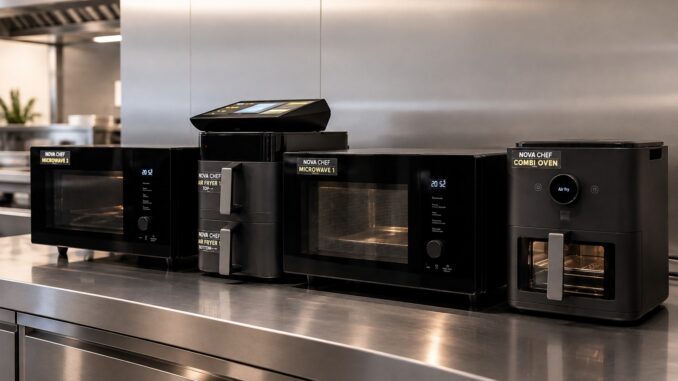
Nova Chef‘s Scan-to-Cook Station is a touchscreen, a barcode scanner and a controller. It does not cook anything itself. It runs the appliances supplied with it: Nova Chef’s combi oven, air fryers and microwaves, up to eight from one station.
Every Nova Chef pack carries a barcode. A member of staff holds it to the scanner. The screen names the dish and tells them which appliance to load. The program for that dish, on that appliance, is already set. They press start, wait for the countdown and plate the dish.
The decision a cook used to make, which heat, how hot, how long, has moved from the person to the pack. That is the whole idea. The chef who developed the dish decided once how it should be finished, and the barcode carries that decision to every site and every shift.
Dishes are ready in three to ten minutes. A new starter can serve the full menu on their first shift, because there is no setting to learn and no timing to remember.
The menu this opens up
With three kinds of heat under one set of instructions, the menu stops looking like a list of bowls.
- From the air fryer: a gourmet beef burger, a crispy chicken burger with chips, soy honey mustard chicken wings.
- From the combi oven: sous-vide featherblade of beef, sous-vide lamb shank, miso salmon with fine beans and edamame.
- From the microwave: the curries, pastas and rice dishes that worked before, such as chicken tikka masala.
That is a complete restaurant menu: small plates, burgers, slow-cooked mains, fish, curries and sides, served with no chef in the building. There are more than 80 dishes in the Nova Chef range, all made in the company’s SALSA-accredited kitchen in London.
It matters commercially because of what guests order. A hotel bar that can only offer bowls sells food to the guest who is already hungry. A bar that can put a burger and a plate of wings in front of people sells food to the table. The demand is already proven on the older kit. A London hotel bar running Nova Chef’s first-generation ovens, a menu of curries, pasta and small plates, reintroduced food with no kitchen staff and, by our case study’s figures, took monthly bar sales from £4,000 to £12,000. The station turns that bar menu into a full restaurant menu.
Control, not just cooking
The second thing the station changes is what a manager can see.
Every cook is logged as it happens: which dish, which appliance, what time, how long. Stock at each site is worked out from what was delivered minus what was cooked, with a prompt when a product is about to run out. For a group, every site appears on one screen.
That answers a question operators have always had to take on trust: was the late-night burger in one hotel cooked the same way as in the next? It also means a new dish can be added to every site at once. The pack arrives, the program is already on the station, and staff scan it like any other.
If the internet connection drops, service carries on. The station talks to its appliances locally, and the dashboard catches up when the connection returns.
What the Nova Chef station needs
The station sits on a counter or in a bar area and needs a power socket and a network connection. The appliances come as part of the kit: Nova Chef’s own combi oven, air fryers and microwaves.
Kits are sized by appliance count. The smallest pairs one microwave with one air fryer, which is enough for a bar menu. The full system adds a second microwave and a combi oven. Larger sites run four microwaves and two air fryers, and one station can control up to eight appliances.
A venue can buy its kit or hire it by the month. Nova Chef installs the system and trains the team on site, and each kit comes with twelve months of software updates, the dashboard and support.
A restaurant without a chef
Earlier chef-free systems covered a night shift or a gap in the rota. This one runs the whole operation. A restaurant, a bar kitchen or a room-service menu can now trade all day with no chef on the payroll.
The cooking is still done by chefs. It happens in Nova Chef’s kitchen, where each dish is developed, cooked and tested. The venue’s own team finishes and plates it, and the station makes sure every plate leaves the way the chef intended, on every shift and at every site.
One kind of cooking stays outside it: food cooked from raw to order, such as a steak done to a guest’s liking or a tasting menu built around a named chef. A venue that wants those needs a kitchen and a brigade. A venue that wants a full menu, served the same every time, no longer does.
The line used to fall between wet dishes and everything else. It now falls between finishing and cooking, which is where it should have been all along.
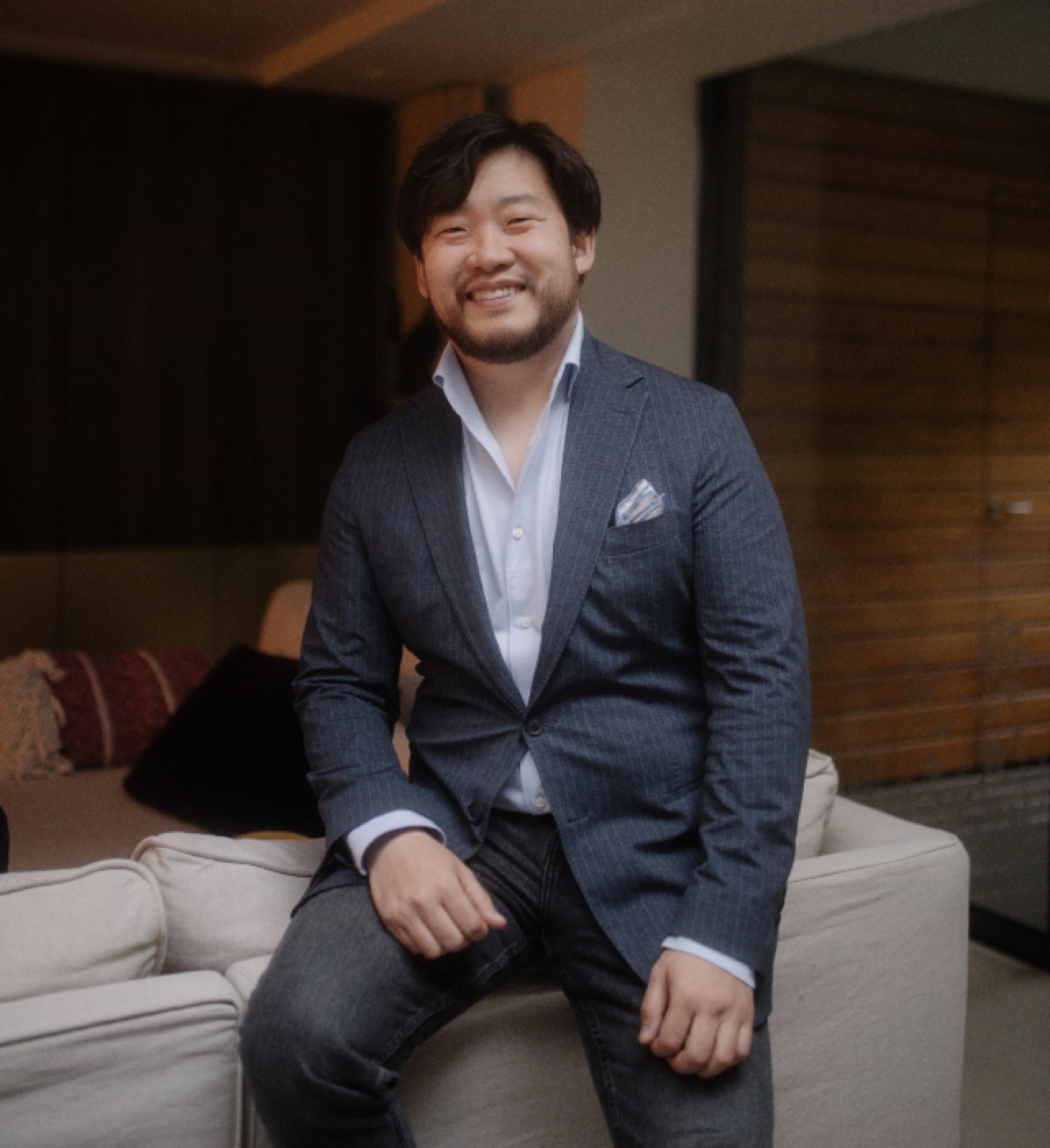 Sergey Men is Co-Founder and Culinary Director of Nova Chef. A chef since 2000, he founded the Japanese restaurant Sumosan and, in 2012, The Markets Group, whose London venues include Bisushima, recognized in the Michelin Guide. At Nova Chef he leads the menu and sets the standard every dish has to meet. Nova Chef makes chef-developed meals in London and supplies 60 UK hotels.
Are you an industry thought leader with a point of view on hotel technology that you would like to share with our readers? If so, we invite you to review our editorial guidelines and submit your article for publishing consideration.