
By Kate Fuller, Head of Marketing at IRIS - 7.18.2026
Today’s hotel guests expect the same seamless digital experience whether they’re booking a room, checking in or ordering a meal. While guest expectations have evolved, many hotel food and beverage operations still rely on manual processes that slow service, increase staff workloads and leave revenue opportunities untapped. If any of the following challenges sound familiar, it may be time to rethink your approach.
Operations: Your Staff Are Overwhelmed at Peak Times—and Underutilized the Rest of the Day
Hotel F&B staffing is a constant balancing act. Breakfast rushes and busy evenings stretch teams to their limits, while quieter periods often leave staff waiting for the next guest interaction. Manual ordering only adds to the challenge. Front desk employees answer room service calls, confirm menu items, relay special requests and manually communicate orders to the kitchen, pulling them away from other guest-facing responsibilities. Meanwhile, guests relaxing by the pool, in the lobby or in other common areas may never have the opportunity to order because no one is available to take their request.
Mobile ordering allows guests to place orders wherever they are, reducing reliance on manual processes and freeing staff to focus on hospitality rather than order administration. Instead of answering phone calls and processing routine orders, employees can spend more time assisting guests, handling special requests and maintaining service standards. The added flexibility also makes it easier to extend food and beverage service into areas that previously could not be staffed consistently.
Revenue: Guests Want to Spend More—But the Opportunity Is Being Missed
Upselling in hotel F&B often depends on timing, staff availability and individual confidence. Guests in their rooms, at the pool or relaxing in public spaces may never be presented with additional offerings. Even when orders are placed by phone or in person, opportunities to recommend add-ons, featured items or promotions are frequently overlooked. Breakfast pre-orders present another challenge. If the process is cumbersome, many guests simply skip it.
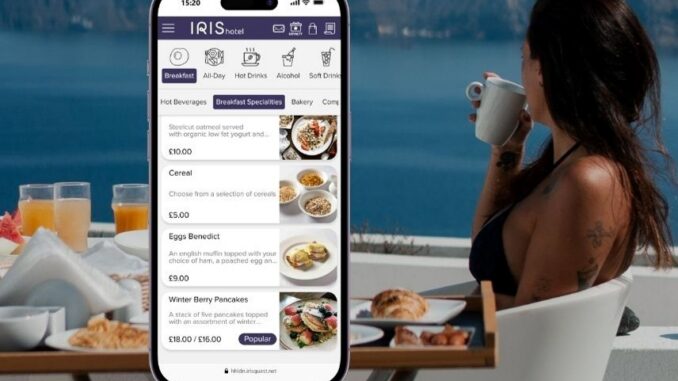
Digital ordering gives guests continuous access to menus throughout the property, making it easier to order when it’s most convenient. Digital menus can automatically highlight featured items, add-ons and limited-time promotions at the point of purchase, while photography helps showcase menu offerings more effectively. Simplified pre-order workflows can also encourage greater breakfast participation. Many hotels using digital ordering report higher average order values compared with traditional ordering methods.
Group Consistency: Different Properties, Different Experiences
Many hotel groups operate multiple mobile ordering platforms across their portfolios because individual properties use different POS systems. The result can be inconsistent experiences for both guests and employees.
A guest staying at several hotels within the same brand family may encounter a different ordering interface, menu presentation and workflow at every property. Staff who transfer between hotels often need to learn multiple systems, creating additional training requirements and operational complexity. A single, POS-agnostic mobile ordering platform can provide a more consistent guest experience across an entire portfolio, regardless of the property’s underlying technology.
Menus, promotions and pricing can be managed centrally while allowing individual hotels to tailor offerings to local needs. Employees learn one interface and one workflow, simplifying training and day-to-day operations while helping reinforce brand consistency across multiple properties.
Service Speed: Guests Are Waiting Longer Than They Should
Lengthy wait times remain one of the most common sources of guest dissatisfaction in hotel food and beverage operations. Much of that delay occurs before food preparation even begins.
Guests often wait to flag down a server or call the front desk. Orders are then taken manually, relayed to the kitchen and entered into the POS before preparation starts. During busy periods, those additional steps can add meaningful delays.
Mobile ordering streamlines the ordering process by allowing guests to submit orders directly from their devices. Orders move immediately into the kitchen workflow, reducing manual handoffs and allowing preparation to begin sooner. The result can be shorter wait times, improved kitchen efficiency and a smoother overall guest experience.
Integrations: Your Technology Isn’t Working Together
Many hotels manage food and beverage operations across multiple disconnected systems, including the POS, digital menus and property management platform. Keeping menus, pricing and inventory synchronized often requires manual updates in several places, increasing administrative work and the risk of errors.
Outdated pricing or unavailable menu items can create unnecessary friction for both staff and guests. An advanced mobile ordering solution integrates directly with leading POS platforms, creating a single source of truth for menu information. Updates made within the POS can automatically flow to digital menus, reducing duplicate work and helping ensure guests always see current pricing and availability. For hotel teams, that means less time managing multiple systems and more confidence that menus and kitchen operations remain aligned.
Order Accuracy: Small Mistakes Create Big Guest Problems
Order errors remain one of the most common challenges in hotel F&B operations. A guest calls in an order, a staff member records it manually, relays it to the kitchen and somewhere along the way a modifier is missed, an allergen note is overlooked or an item is entered incorrectly. The result is more than an incorrect meal. Guests wait longer while the order is corrected, staff spend additional time resolving the issue and the overall experience suffers.
Mobile ordering allows guests to build their own orders from start to finish. They can select modifiers, identify dietary preferences, review ingredient information and add notes for the kitchen before submitting an order. Because those details are transmitted directly into the ordering system, the opportunity for miscommunication is significantly reduced, helping improve order accuracy while minimizing manual intervention.
Competition: Third-Party Delivery Apps Have Changed Guest Expectations
Consumers have grown accustomed to the convenience of food delivery apps such as Deliveroo and DoorDash. Simple navigation, digital menus, streamlined checkout and order tracking have established a high standard for the ordering experience. When hotel ordering feels cumbersome by comparison, guests may choose to order from an outside restaurant instead, taking revenue off property while limiting the hotel’s ability to control the guest experience.
An advanced mobile ordering solution provides hotels with a digital ordering experience designed specifically for hospitality. Guests can browse menus, customize orders and complete transactions from their own devices while enjoying food prepared on-site and delivered directly by hotel staff. For hotels, the result is an opportunity to capture more on-property dining revenue while delivering an experience that meets the expectations many travelers now have for digital ordering.
Content Management: Printed Menus Become Outdated Quickly
Printed menus begin aging the moment they’re produced. Seasonal changes, sold-out items, pricing updates and limited-time promotions can quickly make printed materials inaccurate. Replacing menus throughout a property is both time-consuming and costly. Until updates are made, guests may attempt to order unavailable items or question pricing differences, creating unnecessary friction for staff.
Digital menus can be updated in real time. Hotels can remove unavailable items, adjust pricing, introduce seasonal specials or launch promotions across every property without reprinting materials. Guests always see the latest menu, while staff spend less time explaining discrepancies or managing outdated information.
Communication: Language Shouldn’t Be a Barrier to Great Service
International travelers often face challenges when ordering food and beverages, particularly when communicating dietary restrictions, allergies or ingredient preferences. Even small misunderstandings can affect the guest experience.
An advanced mobile ordering solution i supports multilingual digital menus, allowing guests to browse in their preferred language. Menu descriptions, modifiers and allergen information can all be presented in a language they understand, helping guests order with greater confidence while reducing the potential for miscommunication. The result is a more inclusive dining experience for international travelers and fewer language-related challenges for hotel staff.
Loyalty: Better Experiences Lead to Better Reviews
Food and beverage experiences often shape a guest’s overall impression of a hotel. Long wait times, inaccurate orders, outdated menus and complicated payment processes can all contribute to negative online reviews. For hotel groups, consistency matters just as much as quality. Guests increasingly expect a similar experience across every property within a brand portfolio, and inconsistent service can weaken brand loyalty over time.
Digital ordering addresses many of the operational issues that contribute to guest dissatisfaction. Improved order accuracy, faster service, integrated payment and current menu information help create a smoother dining experience for both guests and staff. For hotel groups, deploying a centralized platform also promotes greater consistency across properties. Staff spend less time managing manual processes and more time engaging with guests, while travelers benefit from a familiar ordering experience regardless of which hotel they visit.
Mobile ordering is no longer simply a convenience feature. For many hotels, it has become an operational tool that helps improve efficiency, support staff, increase guest satisfaction and capture additional food and beverage revenue. An advanced mobile ordering solution helps streamline ordering, reduce manual processes and create a more consistent guest experience across the property. As guest expectations continue to evolve, digital ordering is becoming an increasingly important part of modern hotel food and beverage operations.
 Kate Fuller is responsible for raising IRIS’s profile and generating demand for our first-class software solutions that are trusted by the leading luxury and chain hotels of the world. Prior to joining IRIS, a global market leader in digital F&B ordering, guest directory and concierge solutions for hotels, Kate worked for Guestline, a global PMS vendor, to market their range of solutions to independent hotels across Europe and Asia. With over 20 years of marketing experience and most latterly in the technology industry, Kate loves combining her IT marketing experience and passion for hospitality, developing content, creating campaigns, and working closely with hoteliers to help them maximize their revenue potential.
Are you an industry thought leader with a point of view on hotel technology that you would like to share with our readers? If so, we invite you to review our editorial guidelines and submit your article for publishing consideration.