
By Dustin Stone, HTN staff writer - 9.18.2026
A hotel room lock was once a fairly self-contained purchase. It needed to be secure, dependable and connected to the property-management system so the front desk could issue key cards. Once installed, it might remain in place for a decade or longer.
That model is changing. Access providers increasingly want to manage not only the lock but also the digital processes that determine when guests receive their credentials, how they enter their rooms and what happens throughout the rest of their stay.
Dormakaba’s agreement to acquire Alliants is a significant move in that direction. The UK-based hotel technology company provides digital keys, guest messaging, contactless check-in and checkout, payments, concierge services, workflow automation and guest-facing applications.
Financial terms were not disclosed. Dormakaba said the transaction is expected to close following regulatory approval later this year. According to the company’s acquisition announcement, Alliants supports more than 100,000 hotel rooms worldwide and employs more than 100 people.
Alliants is a relatively small acquisition for a company that generated approximately $3.4 billion in revenue and $546 million in adjusted EBITDA during fiscal 2025/26. Its importance lies less in the immediate financial contribution than in the capabilities and customer relationships it brings to dormakaba.
Founded in Southampton in 2009, Alliants has worked with hotel companies including Four Seasons, Nobu Hospitality and Lore Group. Its platform supports guest interactions from pre-arrival through checkout, connecting hotel systems with messaging, payments, service requests and operational workflows.
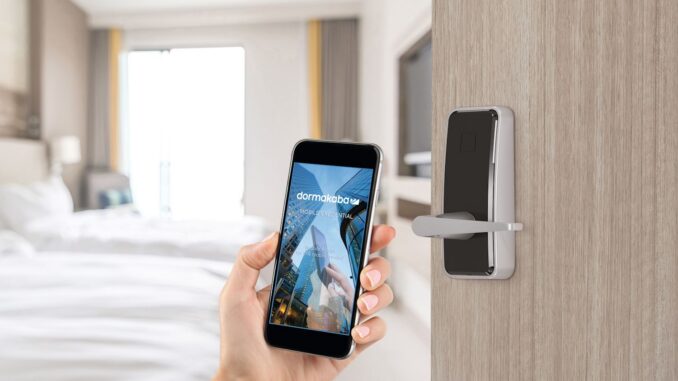
Its digital-key technology can place hotel credentials in Apple Wallet and Google Wallet, allowing guests to open supported doors without downloading a hotel or brand application. Keys can be shared with traveling companions, and supported devices can open doors without requiring guests to wake or unlock their phones.
Avoiding the app-download requirement addresses one of the persistent weaknesses of mobile access. A frequent guest may keep an application from a preferred hotel brand, but an occasional traveler is less likely to install one for a single stay. Wallet-based keys reduce that hurdle by putting the credential somewhere the guest already knows to look.
For dormakaba, the larger opportunity is connecting the key to the events surrounding it. A guest can complete registration and payment before arriving. The hotel can assign the room, send a room-ready notification and issue a digital credential. The same platform can then support service requests, concierge conversations, targeted offers and checkout.
This is where many digital-arrival projects become difficult. A functioning process may require connections among the property-management system, payment processor, identity-verification service, guest application and lock platform. If one connection fails, the guest ends up at the front desk while an employee tries to determine which system caused the problem.
Bringing more of the process under one provider could reduce those handoffs and give hotels a clearer line of responsibility when something goes wrong. It could also make digital access easier to deploy across multiple properties, assuming the combined platform works with the assortment of systems found in most hotel portfolios.
The transaction follows a series of dormakaba investments in connected access. The company’s 2025/26 annual report lists six completed bolt-on acquisitions and two venture investments. These included the acquisition of mobile-credential company any2any, an investment in access-orchestration provider SwiftConnect and the purchase of Vintech Systems, which expanded dormakaba’s lodging access-control presence in Asia-Pacific.
Alliants takes that strategy closer to the guest. Instead of adding another piece of credential infrastructure, the deal gives dormakaba software used by front-office, concierge, guest-relations and digital-commerce teams.
It also widens the company’s competitive field. Dormakaba will continue to face established access-control rivals such as ASSA ABLOY Global Solutions, SALTO and Onity, but it will increasingly encounter hotel software companies that previously operated several layers above the lock.
ASSA ABLOY Global Solutions, which includes the Vingcard hospitality brand, already markets centrally managed physical and digital access technology. SALTO has similarly expanded beyond electronic locks into cloud-based access management and mobile credentials.
Onity brings an especially large installed base to the market. The Honeywell-owned company says it serves more than 30,000 properties, has sold over five million electronic locks and has deployed more than four million Bluetooth-enabled locking devices. Its offerings include DirectKey mobile access, front-desk software, hotel locks and in-room safes.
Honeywell acquired Onity as part of its $4.95 billion purchase of Carrier’s Global Access Solutions business, which also included LenelS2 and Supra. The size of that transaction reflects the value major building-technology companies now place on connected access, credential management and the software surrounding them.
Alliants operates in another busy market populated by guest-experience platforms such as Canary Technologies, Duve, Hudini and INTELITY. Property-management-system providers including Oracle Hospitality and Mews are also expanding their roles in digital check-in, payments, guest profiles and operational automation.
Dormakaba will therefore be competing for software budgets as well as lock contracts. It will have to convince hotel technology executives that a company best known for physical access can also manage guest communications, payment integrations and cloud services that require frequent development and updates.
The acquisition nevertheless creates an attractive distribution opportunity. Dormakaba can introduce Alliants’ software to existing hotel customers, while Alliants gains access to a company with operations in more than 130 countries and an established network for sales, installation and support.
The complication is that large hotel groups rarely operate standardized technology environments. A portfolio assembled through development, acquisitions and third-party management agreements may contain several lock brands, multiple property-management systems and different guest applications. Hotels will be cautious about adopting a platform that favors one manufacturer’s hardware or makes it harder to change vendors later.
Dormakaba and Alliants have said their products will remain interoperable with other providers. For hotel buyers, the real test will be whether competing lock systems and software partners receive the same development attention, implementation support and service levels as dormakaba’s own products.
Data ownership will also require close examination. A traditional access system manages room credentials and entry records. Alliants’ platform can also process guest messages, payment information, service requests, preferences and behavioral data. Combining those functions can help hotels provide more personalized service, but it also creates a larger target for cyberattacks and a more complicated set of privacy obligations.
Support responsibilities must be equally clear. If a guest completes digital check-in but does not receive a working key, the problem could involve the PMS, payment authorization, wallet credential, lock or connection among them. Hotels will expect the combined company to diagnose those failures without sending staff through a chain of separate vendors.
Digital access does not remove the need for front-desk employees or physical key cards. Phones are lost, batteries die and electronic credentials sometimes fail. Some guests will continue to prefer help from a person. The practical value lies in giving guests another option and reducing the time employees spend issuing and replacing keys—not in assuming that every arrival can be fully automated.
Dormakaba has not said whether Alliants will continue operating independently, how its products will be packaged or whether pricing will change after the acquisition. Those decisions will help determine whether dormakaba is building a broadly open hospitality platform or primarily adding software that makes its own access products more competitive.
Either outcome would reflect a meaningful change in the access-control business. The room lock is no longer an isolated piece of hotel hardware. It is becoming part of a larger system connecting reservation data, guest identity, payment status, room assignment and service delivery.
That changes how hotels should evaluate access vendors. Hardware durability and security remain essential, but technology buyers must now consider APIs, cloud reliability, wallet compatibility, data policies, integration costs and the vendor’s software roadmap.
The lock on the door may look much the same. The business being built around it does not.