
By Dustin Stone, HTN staff writer - 9.18.2026
Astral Hotels is betting that guests may be more willing to use hotel self-service technology if it looks and behaves less like a machine.
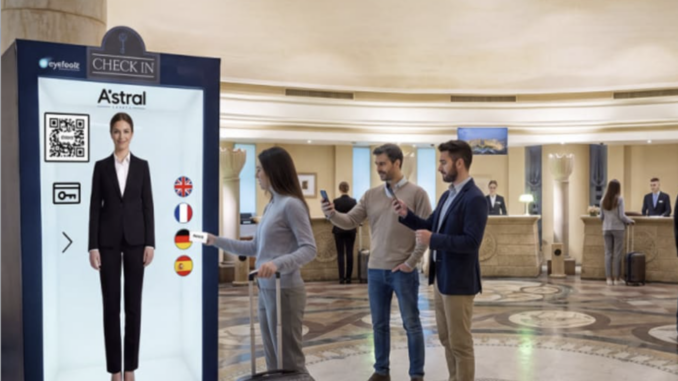
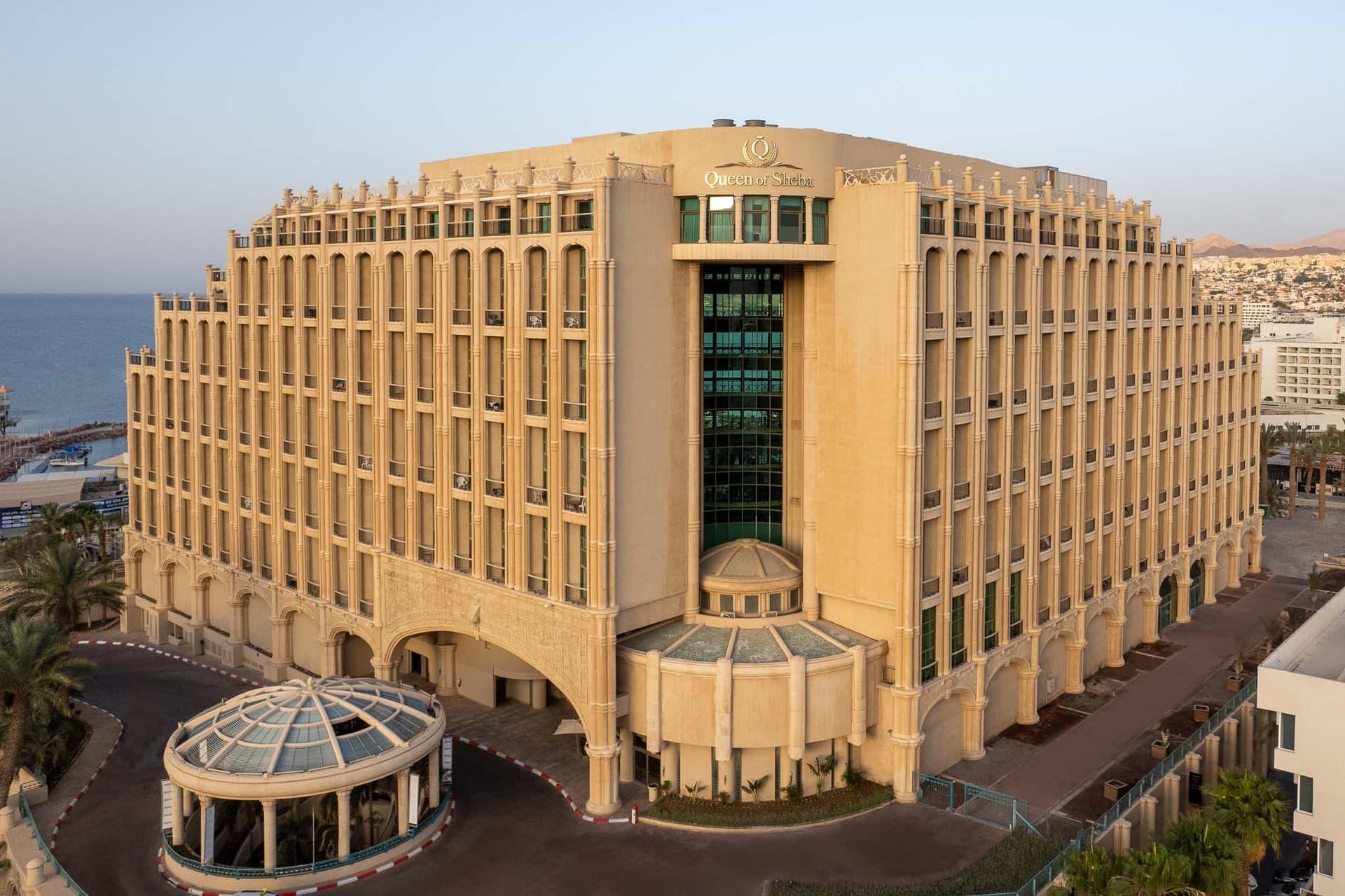
The Israeli hotel group is introducing an artificial intelligence-powered check-in kiosk featuring a life-sized holographic avatar at its Queen of Sheba Hotel in Eilat. The avatar will guide guests through check-in, provide hotel and destination information and dispense physical room key cards without requiring assistance from a front desk employee, according to a Jerusalem Post report.
Developed by Israeli technology company EyeFeelIt, the system combines an interactive holographic figure with an AI-powered digital concierge. Guests begin the arrival process by scanning a QR code displayed by the avatar, complete the required steps on their smartphones and collect a key card from the kiosk when the transaction is finished.
The arrangement is notable because the hologram is not handling the entire check-in transaction itself. It serves as the host and physical point of arrival, while the guest’s phone performs much of the administrative work. That could make the experience more comfortable for travelers who would rather enter personal information on their own devices than on a shared lobby screen. It also gives Astral a way to automate arrivals without relying exclusively on mobile keys, which remain unfamiliar or undesirable to some guests.
Beyond check-in, the avatar can answer questions about hotel amenities, recommend restaurants and suggest nearby attractions. That could make it useful after the initial arrival rush, when conventional check-in kiosks often sit idle.
Lior Berneman-Zvulun, vice president of marketing and digital at Astral Hotels, described the installation as a first step in the group’s broader effort to incorporate new technology into the guest experience. Astral plans to evaluate the Queen of Sheba deployment before deciding whether to expand the system to other properties.
EyeFeelIt CEO Sharon Birnbaum said the company designed the avatar to be more than a transaction point. The goal is to make it an around-the-clock interface between the guest and the hotel.
Astral is entering a part of the hotel technology market that is still novel but no longer without competition. Nordic operator CIC Hospitality introduced an AI-powered holographic front desk at the Aiden by Best Western Lolland in Denmark in late 2024. That system, developed with Holoconnects, RAVATAR and Mews, can check guests in and out, generate room keys, book additional rooms, make restaurant and spa reservations and answer questions.
The Aiden system also illustrates one capability that could become important as Astral develops its own model: human backup. If the AI avatar at the Danish property cannot complete a request, the guest can connect with a CIC Hospitality employee in Oslo, who appears in the same life-sized display and assists remotely. Holoconnects says the broader CIC rollout has since reached 30 hotels in Scandinavia.
That example also shows how quickly the competitive standard is moving. A holographic figure may attract attention, but appearance alone will not distinguish a system for long. The more meaningful differences will lie in property-management-system integration, identity verification, payment handling, key encoding, multilingual support and the ability to transfer a stalled interaction to an employee without forcing the guest to start over.
Astral and EyeFeelIt have not yet publicly explained which property-management and locking systems will support the Queen of Sheba installation, how the system will authenticate guests or what happens when it cannot complete a check-in. The initial report also does not specify the languages the avatar will support or whether guests will be able to reach a live employee through the kiosk.
Those details matter because the basic market for automated arrival is already crowded. Companies including Mews, Virdee, Ariane Systems, Stayntouch and Canary Technologies offer different combinations of mobile registration, self-service kiosks, identity and payment collection, room-key issuance and property-system integration. Canary, for example, moves the process onto the guest’s phone without requiring additional lobby hardware.
 The competitive question for EyeFeelIt, therefore, is not whether it can automate a process that other vendors already automate. It is whether a human-scale visual presence can make that automation easier to discover, more inviting to use and more consistent with the atmosphere of a full-service hotel.
A bare touchscreen may work well in a limited-service hotel where speed is the primary objective. At an upscale property, however, management may be reluctant to replace a staffed reception experience with equipment that feels like an airport terminal. A conversational avatar offers a possible compromise: automate the transaction while retaining a visible host in the lobby.
Whether guests perceive that host as engaging or gimmicky will depend largely on execution. The avatar must understand natural questions, provide accurate answers and respond quickly enough to keep the interaction from becoming awkward. Its hotel information must remain current as restaurant hours, amenities and local recommendations change. It must also recognize when a question exceeds its knowledge and direct the guest to an employee instead of confidently providing an unreliable answer.
The strongest business case is unlikely to come from eliminating the front desk. It will come from absorbing simple arrivals and repetitive questions so employees can spend more time handling room problems, special requests and guests who actually need personal assistance. It could also extend basic reception coverage during overnight periods without requiring the same staffing level maintained during peak hours.
Astral will need to measure more than the number of people who stop to look at the hologram. Adoption rate, transaction-completion time, abandoned sessions, employee interventions, key-card failures and guest satisfaction will reveal whether the installation improves hotel operations. The group should also track whether guests return to the avatar for concierge information and whether its recommendations generate restaurant, spa or activity bookings.
Accessibility will be another test. A voice-led interface may work well for many travelers but create difficulty for guests with hearing, speech or visual impairments. Clear on-screen instructions, multiple interaction methods and an obvious route to human assistance will be essential if the system is to serve the full range of hotel guests.
The Queen of Sheba pilot is visually more ambitious than another mobile check-in link or conventional lobby kiosk. But its value will ultimately be determined by a less glamorous standard: whether it gets guests out of the arrival line and into their rooms more quickly without creating new work for employees. If Astral can accomplish that while giving guests useful assistance throughout their stay, the hologram may prove to be more than a lobby attraction.