
7.3.2026
Hotel conversion activity is running at a pace the hospitality industry hasn’t seen in years, and Mincey Marble Manufacturing is in the middle of it. The Georgia-based maker of cast marble shower pans and panel systems has served as the brand standard for some of the most recognized names in hospitality for decades. Today, as major brands launch dedicated conversion flags like Spark by Hilton, Garner by IHG, and Marriott’s City Express, the company is seeing that long-standing trust translate directly into project volume.
The economics driving this moment are straightforward. New construction costs have climbed steeply, and for many ownership groups, acquiring an existing property and renovating it to flag standards simply makes more financial sense. Conversion brands are designed exactly for that scenario, and the bathroom is one of the first rooms that has to meet brand specs. For ownership groups doing the math on a conversion project, Mincey’s track record with the brands themselves and the resale value that comes with a well-specified, timeless bathroom make the decision easier.
“Owners want to know how a product holds up after thousands of guest stays,” said Melissa Schroeder, Vice President Of Business Development at Mincey Marble. “They want to know how fast a room turns around if there’s a problem. And they want to know that what they spec is actually going to show up as promised.”
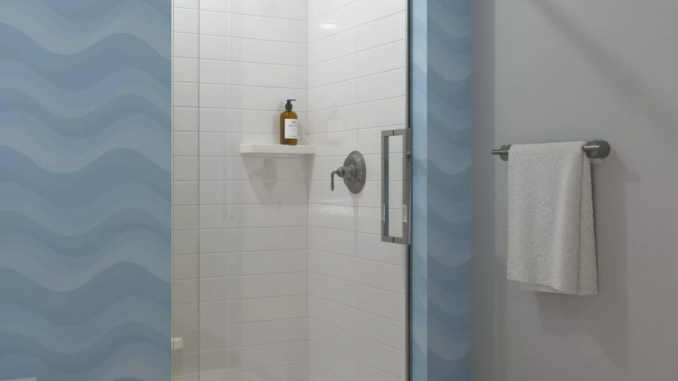
Groutless marble shower panel systems have been a Mincey hallmark long before they became an industry talking point. Tile is still common in lobbies and public bathrooms, but in guestroom showers, ownership groups and brand teams have long understood that groutless systems eliminate the mold, staining, and resealing headaches that grouted tile inevitably brings.
That practical reality has only grown more pressing since the pandemic. Housekeeping departments across the industry have faced serious recruitment and retention challenges, and many properties are still operating with leaner-than-ideal teams while moving to a room-cleaned-on-request model to manage the gap. In that environment, materials that clean quickly and don’t require periodic maintenance aren’t a luxury consideration; they’re an operational necessity. A groutless panel system that a housekeeper can wipe down in minutes, with no grout lines to scrub and no resealing schedule to track, directly addresses one of the most persistent pain points in hotel operations right now.
Tile-look textured panels have grown right alongside this. Hotels still want the look of tile or natural stone in the bathroom, but they don’t want the headache that comes with it, and panel finishes have come a long way. Mincey says subway-tile patterns, large-format stone looks, and textured finishes that read as the real thing are all moving steadily.
There’s also a longer view that more ownership groups are taking. A bathroom specified with durable, brand-approved materials is an asset when a property eventually trades hands. Buyers and appraisers notice the difference between a bathroom that has held up and one that has been patched together over the years. For operators thinking about the full ownership arc and not just the next flag renewal, timeless bathroom finishes that stay in spec for fifteen to twenty years are a meaningful part of the property’s story at sale.
Domestic sourcing is another spot where attitudes have changed. Lead times on imported bathroom goods have been a bit of a mess since 2021, and tariffs on overseas ceramics and stone have made budgeting harder. Developers who used to default to offshore for the price tag are now doing the full math, including shipping risk, duty, and what a slipped schedule actually costs. For a project tied to a seasonal reopening, one late shower delivery can knock the whole phase sideways.
“A few years ago, offshore sourcing often delivered a meaningful cost advantage,” said Schroeder. “Today, once you factor in tariffs, freight, lead times, product damage replacements, and schedule risk, the value equation has changed considerably.”
Accessibility specs have picked up, too. Senior living, extended-stay, and accessible-room categories are pushing demand for low-threshold pans, slip-resistant surfaces, and proper grab-bar mounting built into the wall. ADA has shaped a portion of every hotel’s room mix for a long time, but Mincey says more brands are now going past the minimums, partly because travelers are getting older and partly because accessible rooms get booked by plenty of people who don’t formally need them.
How renovations get planned has also changed. The old seven-to-ten-year full guestroom refresh is still around, but several brands are running more frequent partial refreshes, with owners wanting updated finishes without losing a room for two weeks.
Multifamily and student housing are running a similar play. Both deal with constant turnover and tight schedules, and both have moved toward materials that small crews can install without drama. Mincey says volume in both segments is up, with student housing in particular working against summer turnover windows that leave almost no margin for delays.
There’s an operational reason for the shift, too. Property managers are looking harder at lifecycle costs and not just sticker price. A cheap enclosure that needs replacing in five years rarely beats a more durable one that lasts fifteen or twenty, once you do the full math.
Mincey expects this renovation cycle to be one of the more active the company has seen. The company, and its state-of-the-art manufacturing facility in Gainesville, Georgia, are built for short lead times to address the compressed schedules that conversion projects demand. The bigger point, the representative noted, is that the foundation was already there.
“We’ve been the brand standard for Marriott, IHG, and Hilton for a long time,” said Schroeder. “What’s different right now is the pace; conversion activity is bringing a lot of projects to market fast, and ownership groups want a bathroom product they can trust to meet flag requirements, hold up over time, and not become a maintenance problem. That’s always been what we do.”